REVIEW · SYDNEY
Bondi Beach: 2-Hour Surf Lesson Experience for Any Level
Book on GetYourGuide →Operated by Let's Go Surfing · Bookable on GetYourGuide
Bondi makes beginners feel brave fast. This 2-hour lesson at famous Bondi Beach is built for first-timers, with small groups of up to 5 so you get real coaching instead of standing around. I like that the instruction isn’t generic either—people describe instructors such as Jessie, Dan, Matt and Andrea, and Marcus as friendly, patient, and focused on teaching basics you can actually use.
You should know one thing before you go: ocean and beach conditions can change fast. One lesson run later in the session can mean a more crowded beach, and wave quality can swing with tide and wind, so your best rides may come in bursts rather than nonstop.
In This Review
- Key things that make this Bondi surf lesson work
- Bondi Beach surf lesson: what you’re really signing up for
- Where you meet and how to find the spot on Bondi
- The first part of your 2 hours: safety and wave smarts
- Learn by doing: warm-up drills on the sand
- Into the water: your coaching cycle and why it helps
- Technique basics you’ll likely focus on
- Gear included: why it’s more convenient than it sounds
- What Bondi adds to the learning experience
- Instructor quality: how to judge if this is the right vibe
- Price and value: is $70 fair for what you get?
- Who should book this Bondi lesson (and who might skip it)
- Practical tips for your best chance at standing up
- Should you book this Bondi 2-hour surf lesson?
- FAQ
- How long is the surf lesson?
- What does the lesson cost?
- How many people are in each group?
- Where is the meeting point?
- What’s included in the price?
- What should I bring?
- What is the minimum age?
- Are pregnant women allowed to join?
- Can I get a refund if I cancel?
Key things that make this Bondi surf lesson work
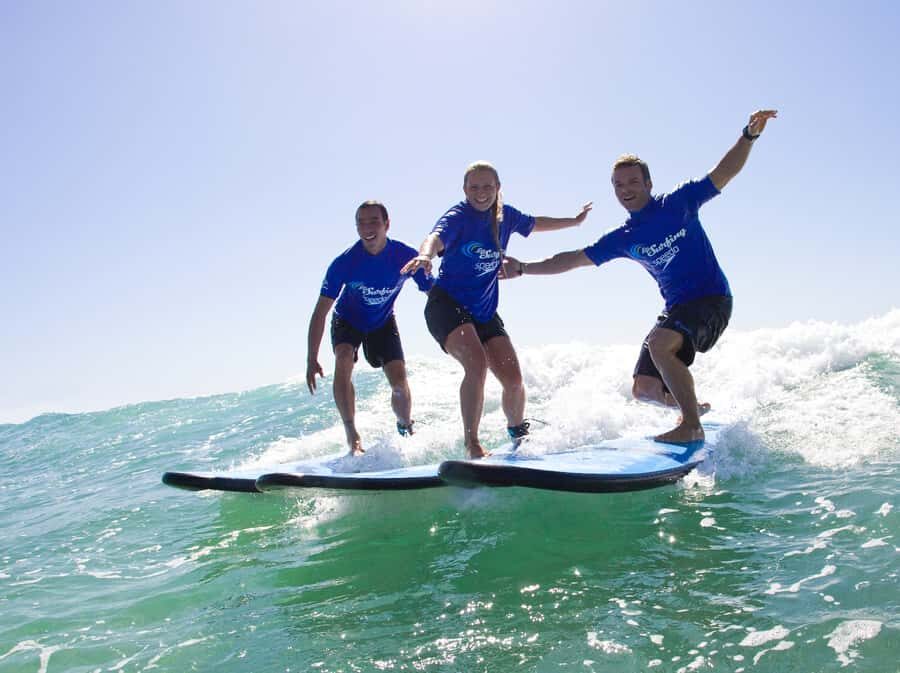
- Max 5 students means faster feedback as you rotate through more attempts.
- Safety training is part of the lesson, with riptide and wave awareness taught before you paddle out.
- Your gear is handled: soft surfboard, wetsuit, UV rash vest, sunscreen and zinc.
- You practice on the sand first, then move into the water with step-by-step guidance.
- Instructors mix encouragement with technique, so most people finish standing and catching waves.
Bondi Beach surf lesson: what you’re really signing up for
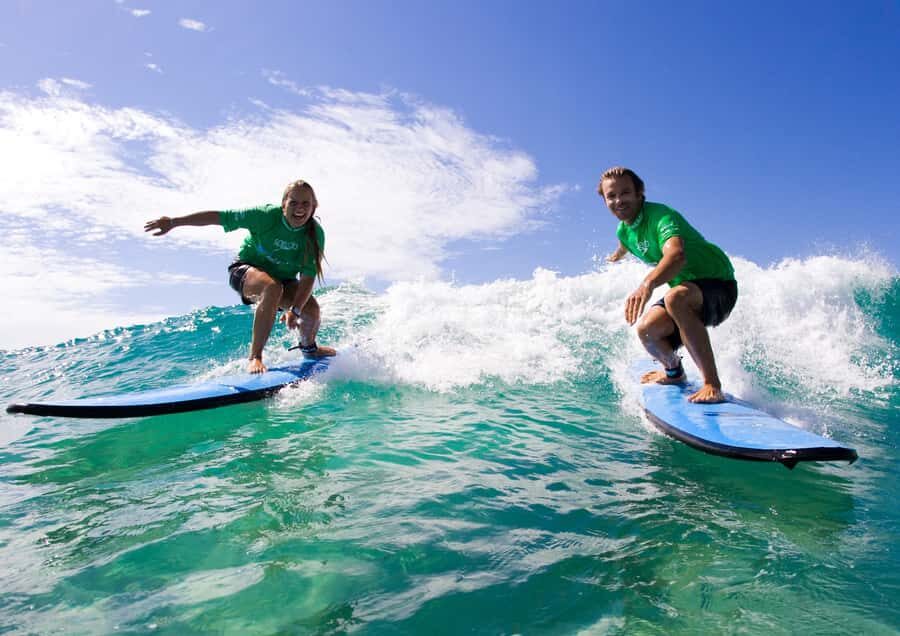
This is not a quick photo-op in the surf. You’re there for skill basics, ocean awareness, and the simple mechanics that help you stand up on a surfboard without panic.
The format is short—just 2 hours—but it’s designed to pack in the right sequence: get your body set up, learn how to read what’s happening in front of you, then go try it. The small group size matters here. When you’re with five people or fewer, you spend more time actively surfing and less time watching others struggle through one try at a time.
And Bondi adds a special kind of motivation. Even if you’ve never surfed before, it’s hard not to feel the energy of a beach that’s practically synonymous with surfing in Australia. The best part for beginners is that Bondi is famous, but the lesson still stays practical: safety first, then technique you can repeat.
You can also read our reviews of more tours and experiences in Sydney


Where you meet and how to find the spot on Bondi
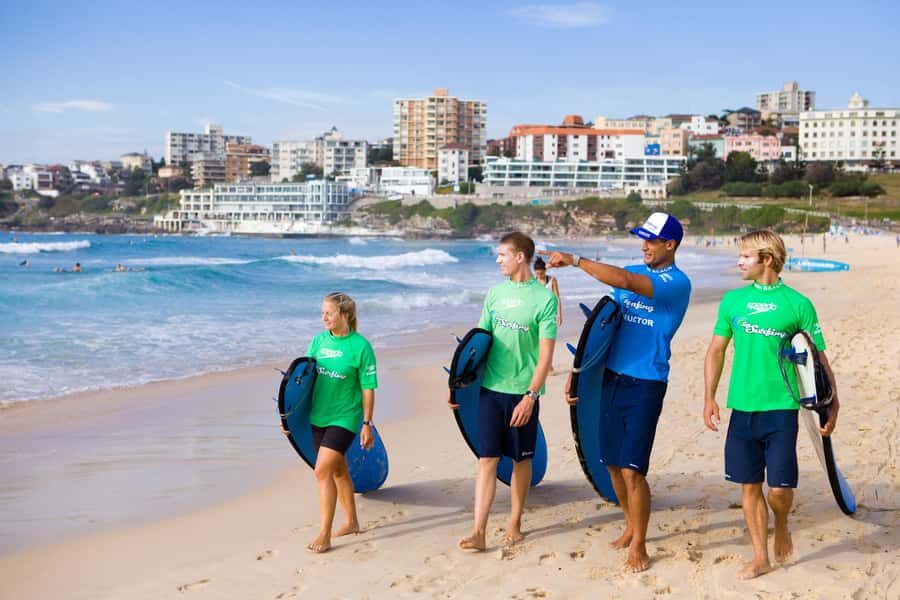
You’ll meet at Lets Go Surfing, 128 Ramsgate Avenue, Bondi Beach 2026. The instructions are simple: if you’re looking at the water, you’ll want to be on the left-hand side of the beach.
Plan to arrive about 20 minutes early. That buffer helps you get sorted (wet gear on, sunscreen/zinc applied if needed, quick fit check) before the group briefing starts. Surf lessons move quickly, and showing up late can mean you lose the portion where you learn how to stay safe and what the plan is for your time in the water.
The first part of your 2 hours: safety and wave smarts
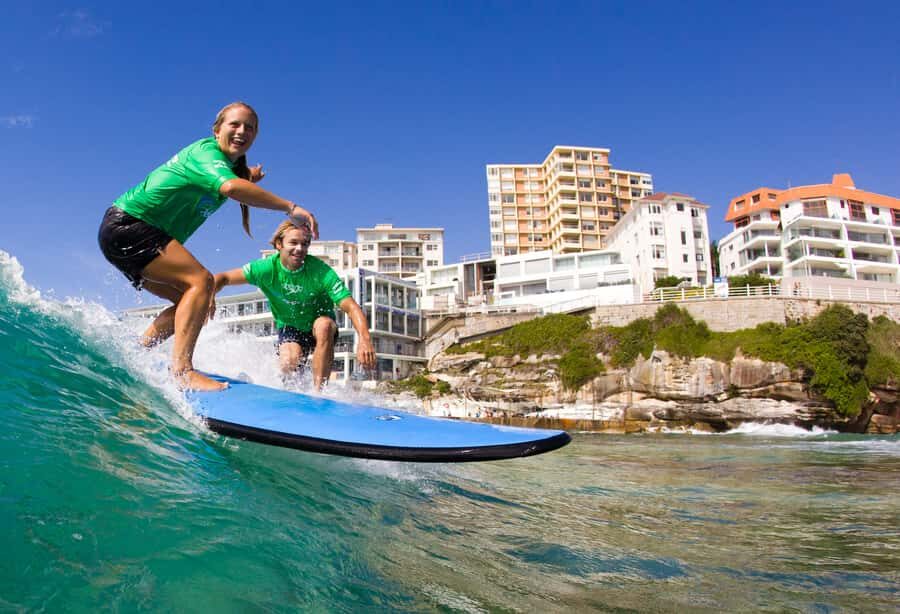
The early minutes tend to be the difference between a stressful first session and a confidence-building one. You’ll get a safety briefing focused on how waves and currents work, with attention to riptides and what to do if you encounter one.
A useful detail here is that the safety talk isn’t treated like a lecture you have to endure. In the coaching style people describe, you get the key terms and the practical responses so you’re not guessing once you’re standing in the shallows. Some sessions include riptide spotting and what to do if you get caught, plus basic understanding of the surfboard and parts of it.
That matters for you because your first goal is not to “win waves.” Your goal is to feel in control: where to position, how to respond to what you see, and how to avoid the most common beginner mistakes.
Learn by doing: warm-up drills on the sand
After the briefing, you’ll typically practice motions on the beach. This is one of the smarter parts of the lesson design, because it lets you rehearse the steps without getting knocked around by waves.
Expect things like:
- learning terminology and board basics
- practicing how to get up (the rhythm and body position)
- getting comfortable with the board and stance before paddling
This sand practice is also how instructors keep expectations low and progress steady. If you’re the type who freezes when things feel chaotic, this step buys you calm. You’re building the movement pattern before you add wind, waves, and timing.
Into the water: your coaching cycle and why it helps
Once you’re in the water, the coaching style is the heart of this experience. With a group capped at 5 participants, the instructor can watch what you’re doing each time, then give focused, actionable tips rather than broad advice for the whole beach.
You’ll often cycle through attempts: go out, try, return, get feedback, repeat. That repetition is what makes a short lesson effective. If you only get one try, you might remember the wipeout but not the correction. If you get multiple attempts with feedback, you start building a real working technique by the end of the two hours.
People also mention that instructors will help you with things like how to position for waves and how to drop in when you’re ready. You might not nail everything immediately, but you should get enough guidance that standing up becomes a realistic target—not a fantasy.
You can also read our reviews of more tours and experiences in Sydney






Technique basics you’ll likely focus on
Every instructor has their own style, but the fundamentals are consistent in the way beginners learn best. During the lesson, you’ll probably work on:
1) Board control and stance
You’re learning how to hold the board and get onto your feet with balance. That means correct posture and foot placement, not just hoping for the best.
2) Timing with waves
You need cues for when a set is coming, when to paddle, and when to try standing. In beginner surf, timing often matters more than strength.
3) Safe approach to the surf zone
You get guidance to help you avoid the worst chaos: don’t paddle out blindly, and don’t assume every wave has the same energy.
4) Encouragement that doesn’t pressure you
Several people describe the vibe as low-stakes and confidence-building. That tone matters because fear makes your body stiff. A relaxed body learns faster.
Gear included: why it’s more convenient than it sounds
This lesson includes a lot of what usually makes surf day complicated. You’re provided with:
- a soft surfboard
- a warm wetsuit
- a UV rash vest
- sunscreen and zinc
- change rooms
- security for personal belongings
- an outdoor shower
For you, that’s not just comfort. It’s time and hassle saved. You don’t need to figure out board rentals, wetsuit sizing, or bring your own sun protection and hope it behaves in ocean spray. The included zinc/sunscreen also matters on a long beach day at Bondi, especially if you burn easily.
Only thing to remember: you still need to bring swimwear and a towel. No towel is included, and you’ll want one for after the shower.
What Bondi adds to the learning experience
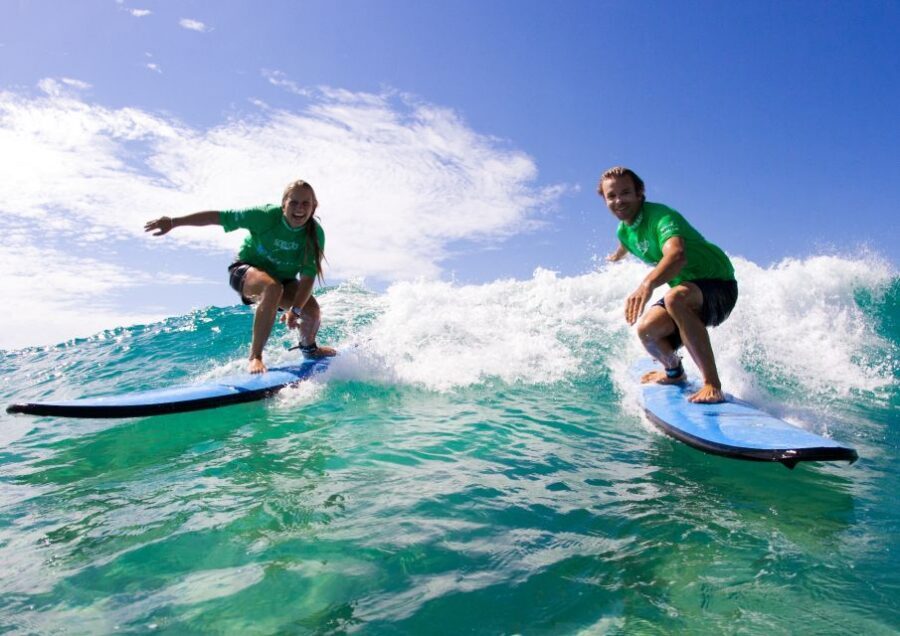
Bondi Beach is iconic, but the best part is how it supports beginners. The beach has a recognizable “surf scene,” so the lesson feels like part of a living culture, not a random activity in the middle of a trip.
You’ll also likely notice that your instructor is constantly managing the reality of surfing here: conditions shift, crowds move, and wave sets come and go. One person noted that the beach got crowded later in the lesson, which is a real consideration. If you’re sensitive to crowds or you prefer quieter water practice, choosing an earlier slot can help.
And if the waves are smaller than expected, that can still work in your favor. Smaller, learner-friendly surf can be easier to manage while you build confidence and learn timing.
Instructor quality: how to judge if this is the right vibe
The biggest repeat theme across the lesson experience is instructor presence. People describe instructors as patient and friendly, with coaching that feels personalized. Names that come up include Jessie, Dan, Matt and Andrea, Brontë, Freddie, Luke, Marcus, Luke again in another session, and others such as Tom and Max.
You can use this to guide your own expectations:
- If you want lots of hands-on, you’ll likely get support that helps you correct posture and timing.
- If you want independence with guidance, the lesson still seems to provide enough structure to build confidence without babysitting.
Either way, the small-group rule is doing the heavy lifting. When an instructor can actually see your setup every time, your learning rate jumps.
Price and value: is $70 fair for what you get?
At $70 per person for 2 hours, this can feel like a splurge until you list what’s included. You’re not just paying for the instructor’s time. You’re also getting the surfboard, wetsuit, UV rash vest, sunscreen and zinc, and access to change rooms and an outdoor shower.
That turns the price into a more even equation for a lot of visitors, especially if you’d otherwise spend time shopping or renting gear. Add the max 5 student group size and you start to see why this is priced like a guided experience rather than a casual beach activity.
The other value factor is time. Two hours is short enough to fit into a day of Sydney sightseeing, but long enough to include briefing, practice, and real tries in the water. You’ll come away with more than a memory; you should leave with a clearer sense of what to do next time.
Who should book this Bondi lesson (and who might skip it)
This lesson is aimed at beginners and also works if you want to refresh basic technique. The minimum age is 12, and it’s not suitable for pregnant women.
It’s a great fit if:
- you’ve never surfed and want a safe start
- you like step-by-step instruction
- you want to finish the session with a sense of what to try next
It may not be the right fit if:
- you want a private, one-on-one lesson (this is small group, not private)
- you get very overwhelmed by ocean unpredictability and prefer a slower progression
- your main goal is advanced maneuvers (this is beginner-focused)
Also, note the rule: intoxication isn’t allowed. That’s a straightforward safety decision.
Practical tips for your best chance at standing up
You can’t control tide and wave sets, but you can control how prepared you are.
Bring what you’re told: swimwear and a towel. Wear swimwear you’re comfortable getting soaked in, and pick something you can dry or change out of quickly.
Try to arrive early enough to avoid rushing. When you show up calm, you’re more likely to absorb the safety info and technique cues. And during the lesson, focus on what your instructor is correcting in the moment. Small adjustments—stance, timing, or how you get up—often lead to the biggest progress quickly.
If your first wave attempt feels messy, that’s normal. The best beginner progress comes when you repeat the same action with small corrections, not when you reinvent everything mid-panic.
Should you book this Bondi 2-hour surf lesson?
Yes, I think you should book it if your goal is a real beginner introduction in one of the world’s most famous surf settings. The strongest reasons are the small group size, the structured safety briefing (including riptide awareness), and the fact that you’re given the gear so you can show up ready.
Book it with a simple expectation: you’re learning the basics and building confidence, not becoming a stylish surfer by the end of two hours. If conditions are less than perfect, the lesson format still aims to keep you practicing with feedback, which is exactly what you want on your first go.
If you’re in Sydney and surfing is on your bucket list, this is one of the most straightforward ways to make it happen without turning it into a gear-rental scavenger hunt.
FAQ
How long is the surf lesson?
The lesson lasts 2 hours.
What does the lesson cost?
It costs $70 per person.
How many people are in each group?
Groups are limited to a maximum of 5 participants.
Where is the meeting point?
You meet at Lets Go Surfing, 128 Ramsgate Avenue, Bondi Beach 2026, NSW. If you’re looking at the water, you are on the left-hand side of the beach.
What’s included in the price?
Included items are a soft surfboard, warm wetsuits, UV rash vests, sunscreen and zinc, change rooms, personal belongings security, and an outdoor shower.
What should I bring?
Bring swimwear and a towel.
What is the minimum age?
The minimum age is 12 years.
Are pregnant women allowed to join?
No. The activity is not suitable for pregnant women.
Can I get a refund if I cancel?
Yes. There is free cancellation up to 24 hours in advance for a full refund.
You Might Also Enjoy




More 2-Hour Experiences in Sydney
More Workshops & Classes in Sydney



More Tour Reviews in Sydney
- Blue Mountains Small-Group Tour from Sydney with Scenic World,Sydney Zoo & Ferry
★ 5.0 · 3,709 reviews