REVIEW · SYDNEY
illi-Langi The Rocks Aboriginal Dreaming Tour
Book on Viator →Operated by Dreamtime Southern X · Bookable on Viator
Sydney history has a heartbeat under the Harbour Bridge. This 90-minute walkabout in illi-Langi and The Rocks brings Aboriginal Dreaming into everyday Sydney, with stops tied to place names, natural resources, and living connections to Country. You’ll meet at Cadmans Cottage near public transport and follow a guided route where learning is tied to what you can see around you.
What I like most is the small group size (max 25), which makes it easier to ask questions and keep the pace human. I also like the hands-on start and the way the guide connects details like ochre, native plants, and traditional sites to the bigger story of Gadigal life and ongoing culture—many guides named in feedback, like Emily and Amanda, are praised for making that connection feel personal.
One thing to consider: day-of coordination can be a weak point. A few reports include guide no-shows or confusing cancellations, so you should double-check your start details close to 10:30 am and keep an eye on updates the day of.
In This Review
- Key highlights worth planning around
- Price and value: $33 for a guided Aboriginal walk
- Where you start at Cadmans Cottage and how the walk feels
- Cadmans Cottage: acknowledgement to Country plus the ochre activity
- Argyle Cut: Earth Mother’s ochre on the wall
- Dawes Point Park under the Harbour Bridge
- Hickson Road Reserve and rock art as an art gallery
- Campbells Cove and the Aboriginal saltwater lifestyle
- Illi-Langi / The Rocks: turning the precinct into a walkabout map
- What makes the guide component matter (and what to watch for)
- What to bring and how to prepare for Sydney heat
- Who should book this tour in Sydney?
- Should you book? My practical call
- FAQ
- How long is the illi-Langi The Rocks Aboriginal Dreaming Tour?
- Where do I meet for the tour?
- What time does the tour start?
- What does the ticket include?
- What should I bring with me?
- How big is the group?
- Do kids get a discount?
- Do I use a mobile ticket?
- Is the tour suitable for most people and are service animals allowed?
- What is the cancellation policy?
Key highlights worth planning around
- Max 25 people means you’re not lost in a crowd, and questions are more doable.
- Cadmans Cottage start includes acknowledgement to Country plus an ochre activity.
- Argyle Cut ochre ties Earth Mother paint to what’s physically on the wall.
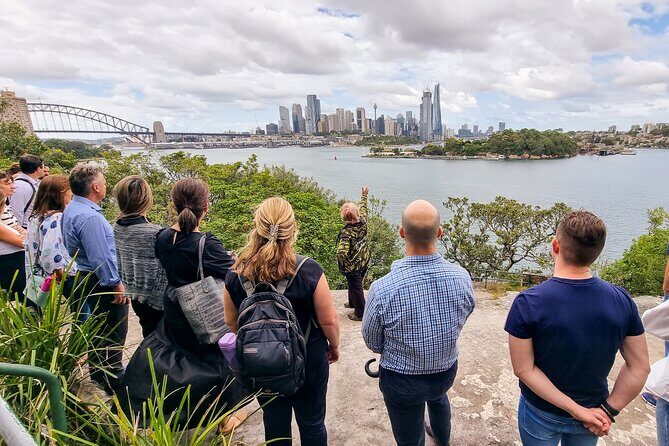
- Harbour Bridge to Campbells Cove views are paired with saltwater lifestyle and spiritual significance.
- Illi-Langi / The Rocks finale turns the whole precinct into a living learning map.
Price and value: $33 for a guided Aboriginal walk
At around $33 for about 1.5 hours, this tour is priced like a budget-friendly introduction that’s still built around real interpretation. You’re paying for two core things: a guided walk with commentary and an Aboriginal guide. There’s no heavy add-on cost, no long bus ride, and most of the learning is tied to places you’d otherwise see without a guide.
The value really shows if you’re visiting Sydney for the first time and you want context fast. The Rocks alone can feel like “pretty streets and old buildings,” but a Dreaming-style walk gives you a framework for what you’re looking at—place names, natural resources, and why the Harbour area matters.
If you want a “sit and listen” museum vibe, you might find this format more active than you expected. You’ll be on your feet, moving between several short stops, then spending a longer stretch within the The Rocks precinct.
You can also read our reviews of more tours and experiences in Sydney.
Where you start at Cadmans Cottage and how the walk feels
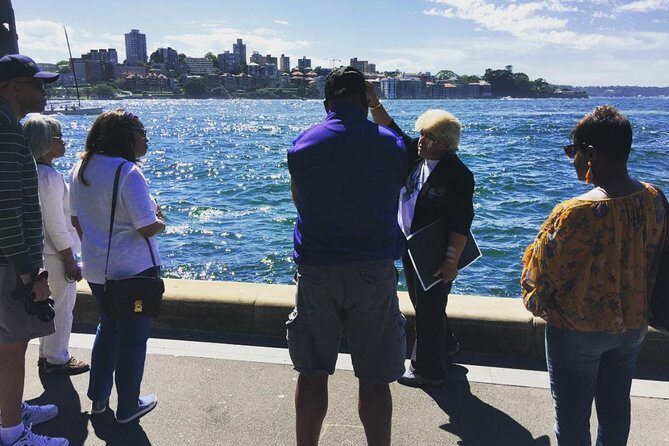
You’ll start at Cadmans Cottage, 110 George St, The Rocks NSW 2000, and the tour ends back at the same meeting point. The meeting spot is near public transportation, which matters because the Rocks is easy to reach, but also easy to overthink when you’re juggling trains, ferries, and walking time.
The route is built for a group: you’ll pause at a handful of sites, learn key meanings, then walk on to the next one. The pace is not marathon-fast, but it also isn’t a long “stroll with lots of stopping to rest.” You’ll want comfortable shoes and a plan to stay hydrated, especially on hot days.
Also, expect a guide-led flow: the day starts with an acknowledgement to Country and an ochre-related activity, then moves through The Rocks with short, focused lessons at specific landmarks.
Cadmans Cottage: acknowledgement to Country plus the ochre activity
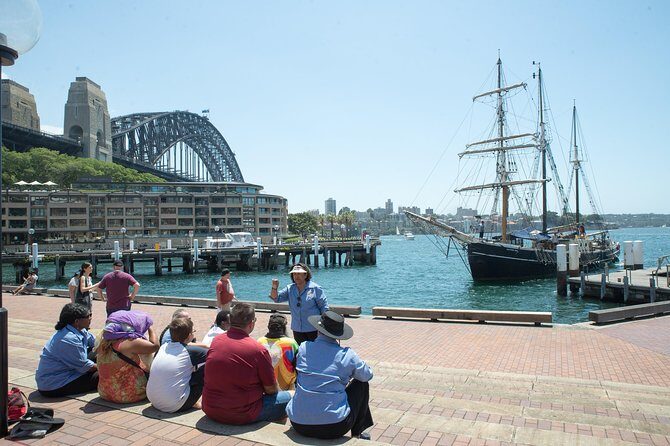
Your first stop sets the tone. At Cadmans Cottage, the tour begins with an introduction and an acknowledgement to Country. Then you do an ocher activity—a start that’s meant to get you thinking about materials, natural resources, and how the story of place is told through everyday things.
From there, you move right next to the Cottage to Bligh Barney Reserve, where the focus shifts toward native flora and fauna and how seasonal life connects to resources. This is the part that works well even if you know almost nothing about Dreaming. You’re given a lens: look at the ground, look at the plants, notice what the site offers.
Why this matters: early context helps every later stop make sense. When you hit Argyle Cut and the Harbour, you’re not just hearing facts—you’re seeing how the same themes show up across different spaces.
Practical tip: if you’re someone who gets impatient at the start of tours, give this first section a chance. It’s short, but it builds the “why” for the whole walk.
Argyle Cut: Earth Mother’s ochre on the wall
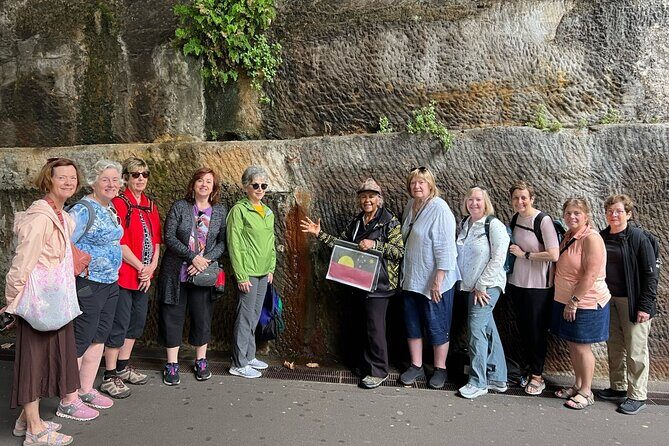
Next up is Argyle Cut, where the lesson turns very physical. You’ll learn about the importance of Earth Mother’s ochre, and how ochre exists in large clay pods on the wall of the cut.
This is a quick stop, but it’s one of the most memorable parts because it ties story to texture and location. Instead of only talking history in abstract terms, you’re looking at a specific material that’s part of the site itself.
What to pay attention to here:
- How the guide explains ochre as more than paint
- How natural resources connect to place and cultural practice
If you’re the kind of person who likes “show me where it is” explanations, Argyle Cut is for you. If you prefer longer stops, you may wish you had extra minutes here.
Dawes Point Park under the Harbour Bridge
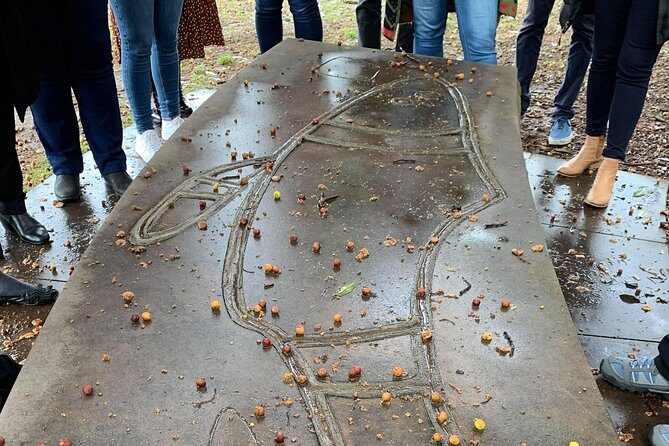
Then the tour moves to Dawes Point Park, under the Harbour Bridge, for stunning water-adjacent views. The learning focus is on the Aboriginal name and the importance of this significant site.
This stop is short, but it gives you something many city tours skip: a reminder that “beautiful view” is also “meaningful place.” The Harbour Bridge and surrounding area are iconic today, but the guide reframes the area through Aboriginal connections to land and life.
What I think you’ll like: the contrast between modern Sydney landmarks and older meanings. You get to enjoy the harbour scenery while also understanding it through an Indigenous lens, not just a postcard lens.
- Blue Mountains Small-Group Tour from Sydney with Scenic World,Sydney Zoo & Ferry
★ 5.0 · 3,709 reviews

Hickson Road Reserve and rock art as an art gallery

At Hickson Road Reserve, you’ll see an example of recent rock art and hear about traditional art galleries around the Sydney region—place-based artwork tied to thousands of years of presence.
This is one of those stops where the best experience depends on your listening style. If you like symbolism and place meaning, you’ll pick up a lot. If you want hands-on making-your-own activities again, this is more observational.
Still, it’s valuable because it reframes “art” as something that’s connected to geography and teaching—not just something you view behind glass. You’re learning how the environment itself can function like a cultural record.
Campbells Cove and the Aboriginal saltwater lifestyle

The next learning stretch focuses on Sydney Harbour, with Campbells Cove as a key viewpoint. Here, the tour centers on the Aboriginal saltwater lifestyle and the spiritual importance of sites in the Harbour area.
You’ll also be guided through the significance of well-known places such as Opera House / Bennelong Point and Circular Quay as part of that bigger spiritual geography.
This section can feel especially powerful if you enjoy practical context. Instead of only talking about spiritual ideas, you’re also getting the angle of how coastal resources and daily life tie together. It’s the kind of explanation that turns a commute-level location into something you understand more deeply.
And since Campbells Cove offers harbour views, you’ll likely get a double payoff: good photos and better context. Just be mindful that wind can be strong near the water.
Illi-Langi / The Rocks: turning the precinct into a walkabout map
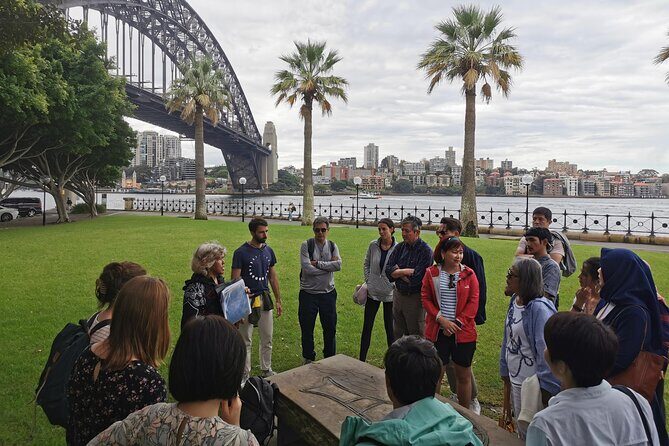
The bulk of the time is in The Rocks precinct, tied to illi-Langi. This is where the tour becomes more than a set of separate stops. You’re walking through an area where the guide can connect the dots—how resources, storytelling, and significance show up across nearby spaces.
In feedback, guides like Nathan and Donia are praised for bringing the area to life through explanations of connection to Mother Earth, plant use, and respectful responsibilities. That’s the spirit of the illi-Langi finale: it’s not only “what happened,” it’s “how to see.”
What you can expect from this segment:
- A continuous flow of stories tied to what you’re walking past
- Reinforcement of themes from earlier stops (ocher, resources, place)
- An overall sense of Sydney as a place with deep custodianship
If you’re the type who likes to end a tour with a feeling of having a new mental map, this is the part that delivers.
What makes the guide component matter (and what to watch for)
The experience is built around an Aboriginal guide and tour commentary, and the guide’s style is a big part of why people rate it highly. In the feedback, Emily and Amanda are repeatedly highlighted for clarity, heart, humor, and welcoming delivery—especially when they explain core ideas like walkabout and sustainability.
At the same time, one or two critiques point to delivery issues: some departures describe the pacing as disjointed or the presentation as less satisfying than expected. That can happen on any walking tour with a group format, because the experience depends on the person leading that day and how your group responds.
So here’s how you can protect your experience:
- Go in expecting a guided walk with short stops, not a long lecture.
- Ask questions when you’re invited to.
- Be patient with the rhythm. If a stop is brief, it’s likely designed to set up the next one.
What to bring and how to prepare for Sydney heat
The tour explicitly says to bring water, especially on hot days. That’s not just generic advice. The Rocks walks can feel longer when the sun is up and you’re moving between viewpoints.
Bring:
- Water (you’ll need it)
- Comfortable walking shoes
- A hat or sunscreen if the forecast looks hot
If you’re sensitive to wind, the harbour stretch can feel cooler even on warm days, but you’ll still be exposed. Plan layers if you run cold.
Also, because the tour ends where it started, it’s easy to jump back into the rest of your day at The Rocks or along nearby transport—but do your post-tour plans with some buffer. The walk is timed, and you don’t want to rush right out the door.
Who should book this tour in Sydney?
This tour is a strong fit if you:
- Want an affordable, meaningful way to understand Aboriginal place connection in Sydney
- Prefer walking tours over museums
- Like getting context for major landmarks without losing the local scale of the streets
It’s also a great option if you’re comparing tours. The Rocks has plenty of historical walks, but this one shifts the frame—so you see the same area through different meaning.
You might want to choose something else if you:
- Want mostly seated time
- Expect a long, detailed stop at every landmark
- Are only comfortable with very predictable day-of operations (because a small number of past departures had coordination problems)
Should you book? My practical call
If your goal is to understand The Rocks and illi-Langi through Aboriginal Dreaming stories, the experience is worth your time—and it’s easy on the budget at $33. The guide-led format, multiple meaningful stops, and the ochre-related start give you a faster path to understanding than most self-guided wandering.
Before you book, do one smart thing: check your confirmation and start details close to departure time. This isn’t about being anxious. It’s just good travel hygiene when you’re relying on a guide for an outdoor meeting point.
If everything lines up, you’ll leave with a new way to look at the Harbour area—one where place names, natural resources, and spiritual importance aren’t background facts. They’re part of how the city works.
FAQ
How long is the illi-Langi The Rocks Aboriginal Dreaming Tour?
The tour runs for about 1 hour 30 minutes.
Where do I meet for the tour?
You meet at Cadmans Cottage, 110 George St, The Rocks NSW 2000, Australia.
What time does the tour start?
The listed start time is 10:30 am.
What does the ticket include?
The experience includes tour commentary and an Aboriginal guide.
What should I bring with me?
You should bring water, especially on hot days. Bottled water is not included.
How big is the group?
The tour has a maximum of 25 travelers.
Do kids get a discount?
Children 2 years and under are free of charge.
Do I use a mobile ticket?
Yes, the tour uses a mobile ticket.
Is the tour suitable for most people and are service animals allowed?
Most travelers can participate, and service animals are allowed.
What is the cancellation policy?
Free cancellation is available up to 24 hours in advance for a full refund. If you cancel less than 24 hours before the start time, the amount paid is not refunded.
You Might Also Enjoy


More Tours in Sydney
- Blue Mountains Small-Group Tour from Sydney with Scenic World,Sydney Zoo & Ferry
★ 5.0 · 3,709 reviews
More Tour Reviews in Sydney
- Blue Mountains Small-Group Tour from Sydney with Scenic World,Sydney Zoo & Ferry
★ 5.0 · 3,709 reviews