REVIEW · SYDNEY
Sydney: Indoor Skydiving Experience
Book on GetYourGuide →Operated by iFLY Indoor Skydiving AU · Bookable on GetYourGuide
Your stomach will think you’re on a plane. In reality, you’re in a controlled wind tunnel at iFLY, where a column of air lets you experience the feeling of true free-fall without jumping out of an aircraft.
I love the hands-on coaching throughout your flights, and I also like that you get two flights, so you’re not rushing from nervous to finished.
One thing to consider: the whole session is only about 90 minutes, so if you’re hoping for a long, repeat-until-you-master-it workout, this format may feel a bit tight.
In This Review
- Key highlights worth circling
- What the Wind Tunnel Does Differently Than a Thrill Ride
- Your 90-Minute Flow: Training, Flight One, Reset, Flight Two
- Inside the Glass Tunnel: How You Actually Fly Your Body
- Two Flights and Real Value: Why $84 Works Here
- Safety, Health Limits, and Who Should Check With a Doctor
- What to Bring (and What to Wear) for an Easy Check-In
- Getting There From Sydney: A Simple Route That Avoids Headaches
- How Clean, Professional, and Family-Focused It Feels
- Who This Is Best For (and Who Might Find It Frustrating)
- Should You Book This Indoor Free-Fall Flight in Sydney?
- FAQ
- Where is this experience in Sydney?
- How long is the session?
- How much does it cost?
- How many flights do I get?
- What’s included in the price?
- What should I wear and bring?
- Is it suitable for children?
- Are there height and weight limits?
- Who should avoid flying?
- Can I cancel or pay later?
Key highlights worth circling
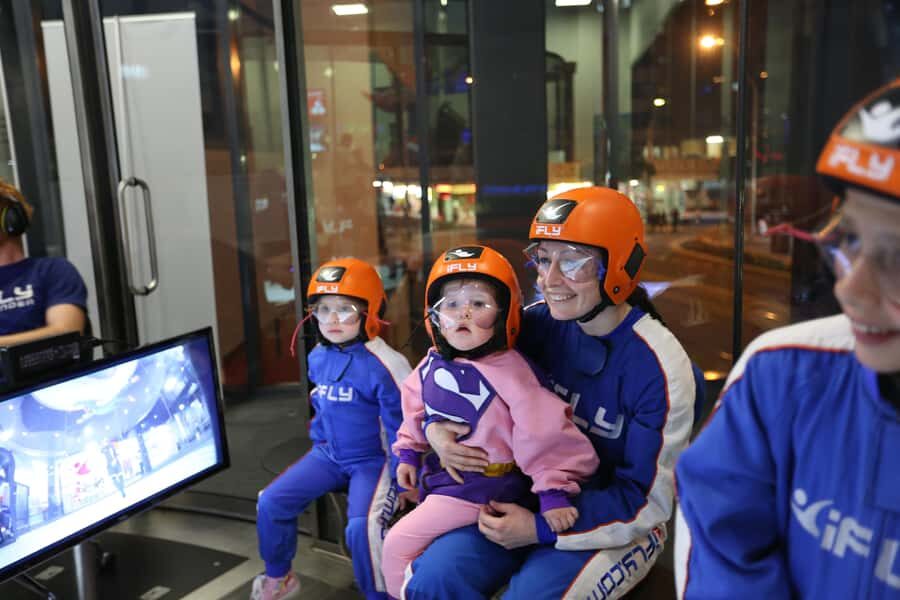
- Two flights per person for a longer total free-fall feeling
- Personal coaching as you learn to lean, balance, and fly your body
- Giant glass tunnel that makes the airflow and control feel real
- A flight certificate you can take home after you land
- Family-friendly energy, but with clear age and health limits
What the Wind Tunnel Does Differently Than a Thrill Ride
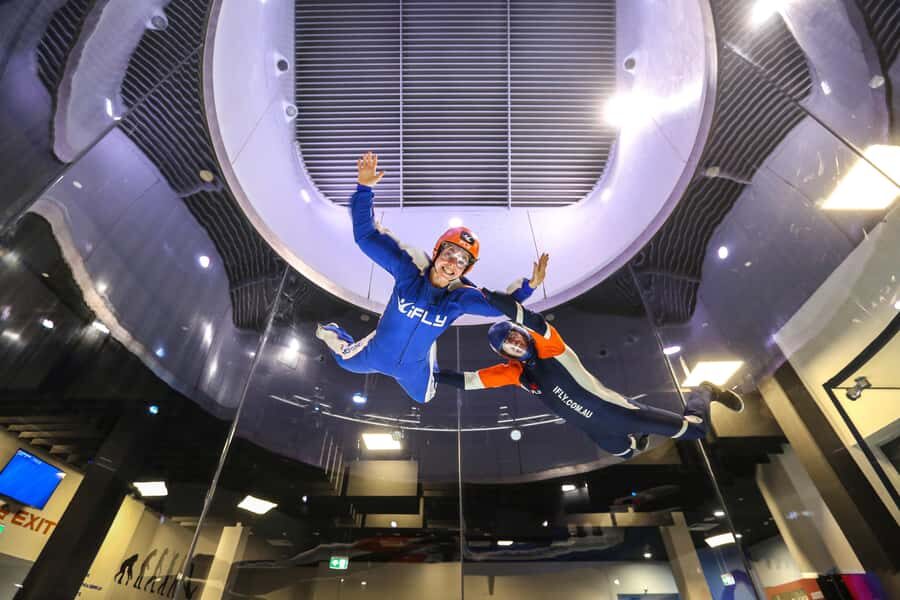
This experience is built around one simple promise: you get the sensation of body free-fall, but inside a fully controlled setup. Instead of gear-clutter and sky anxiety, you’re learning how airflow can lift you, steady you, and let you move in ways that feel very close to what happens right after leaving an aircraft.
What makes it interesting is how physical it is. You’re not just strapped into a seat and watching. You’re wearing a flight suit, helmet, and goggles, then leaning into the wind so your body becomes the control system. It’s adrenaline, but also skill-building.
And yes, it’s safe. Safety here comes from the environment and instruction, not from hoping for the best. The facility uses a realistic, enclosed airflow setup so the instructor can guide you while you fly.
You can also read our reviews of more tours and experiences in Sydney.
Your 90-Minute Flow: Training, Flight One, Reset, Flight Two
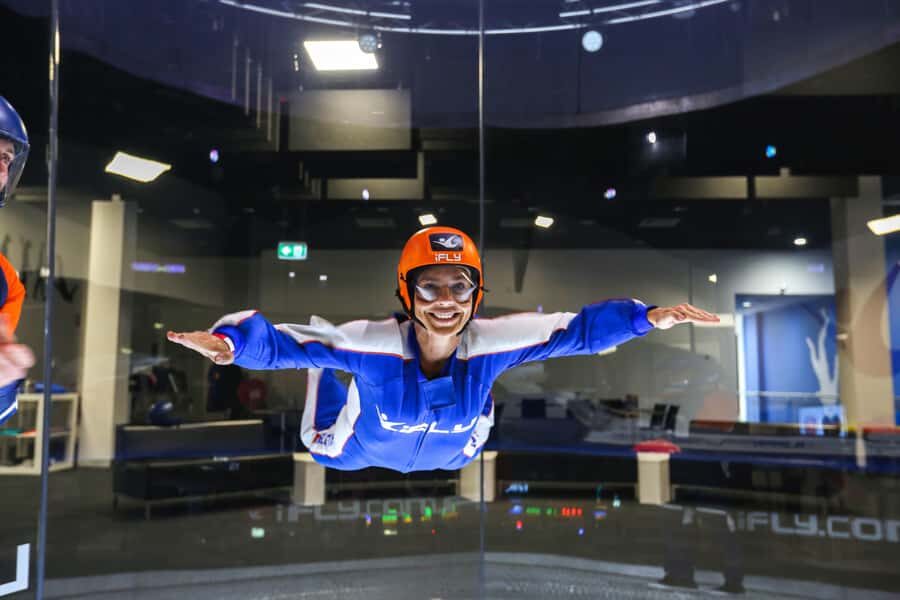
The session runs about 90 minutes, and you’ll want to treat that time as a mini training program, not just a single moment of fun.
First, you arrive at least 1 hour before your flight time. Late arrivals can’t be refunded, so this is one of those parts you should plan for. Once you check in, you meet your instructor and go through a quick safety briefing. Then you gear up in your flight suit, helmet, and goggles.
After that, you’ll start your first flight. You’re guided into the airflow, then you lean into the wind inside the giant tunnel. Your instructor stays close and gives you the kind of cues that help you stop fighting the air and start using it.
Then you get the chance to do it again. The second flight matters because you’ll already understand the sensation. That second round is where a lot of people feel their confidence jump. And since you get 2 flights per person, the total time in free-fall style flying is longer than a one-and-done jump experience.
Inside the Glass Tunnel: How You Actually Fly Your Body
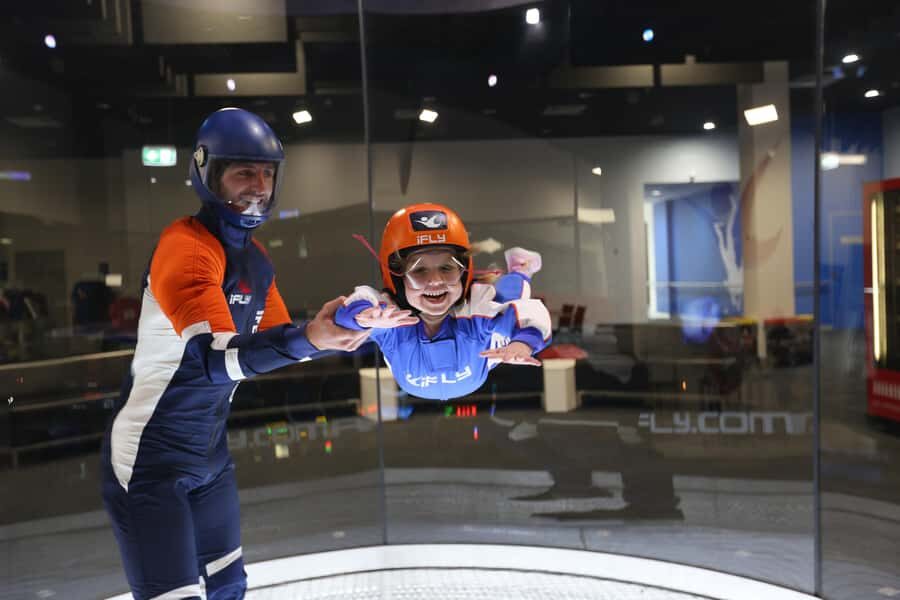
Here’s the magic moment: you stop thinking of the ground as the main reference point. When the airflow is right, the column of air lifts you so you feel like you’re weightless, hanging in a controlled way.
Your instructor’s job is to translate what’s happening in the airflow into something your body can do. You typically start with the basics—how to lean into the wind—and then move into learning how to control your body position. The goal is to help you fly your body similarly to how trained jump flyers move right after leaving a plane.
What you’ll feel is a mix of excitement and concentration. Your brain may start with panic thoughts like, Can I keep this together? Then the cues kick in, your body follows the airflow, and you realize you’re actually making adjustments. It becomes surprisingly addictive.
If you’ve ever had a fear of heights or motion, this setup can be a gentler on-ramp than you’d expect, because the tunnel is controlled and you’re taught step-by-step. One person specifically mentioned beating vertigo through this kind of guided indoor flight, which matches how the session is designed: learn first, fly second, and repeat.
Two Flights and Real Value: Why $84 Works Here
The price is $84 per person, and for this kind of experience it’s not just a ticket to a thrill. You’re paying for: structured training, equipment rental (suit, helmet, goggles), personal instructor assistance, and a flight certificate.
The best value factor is the format itself: 2 flights. With two tries, you’re not spending the first flight just trying to figure out what’s happening. You’re also getting twice the chance to experience the free-fall sensation, which is specifically positioned as giving more total free-fall time than a tandem style jump setup.
Also, this isn’t a huge group spectacle. It’s designed for small groups, which usually means less time waiting and more time getting feedback from your instructor.
You might see different package options, including a basic package, a value package with extra time, and a group package. If you’re going with friends or family, the group option can make scheduling easier and keep everyone moving through the tunnel experience together.
Safety, Health Limits, and Who Should Check With a Doctor
This activity is exciting, but it’s also clear about who needs to be careful. The facility is wheelchair accessible, and people with certain physical impairments—such as amputation and paraplegia—can fly. That’s a big deal for many travelers who want a real hands-on activity without feeling excluded.
That said, there are restrictions. It’s not suitable for:
- Children under 3 years
- Pregnant women
- People with back problems
- People with heart problems
There’s also guidance to consult a doctor if you’ve had prior heart problems or neck or back injuries. People with previous shoulder dislocations are strongly advised not to fly.
Weight and height limits also matter because they help keep the flying window consistent. If you’re under 180 cm, you must weigh less than 105 kg. If you’re over 180 cm, you must weigh less than 115 kg. The information also notes that it’s not suitable for people over 230 lbs / 104 kg, so if you’re close to the limit, it’s smart to double-check your eligibility before you arrive.
If you want the simplest approach: if you have any condition that affects your spine, heart, neck, or shoulders, treat this as a medical decision first, fun second.
- Blue Mountains Small-Group Tour from Sydney with Scenic World,Sydney Zoo & Ferry
★ 5.0 · 3,709 reviews
What to Bring (and What to Wear) for an Easy Check-In
This is one of the easiest activities to pack for. Bring comfortable clothes and closed-toe shoes. Avoid anything bulky or restrictive.
You don’t need to bring your own helmet or goggles—equipment rental is included. The staff handles the gear setup and helps you get into the right starting position for the airflow.
There’s also the waiver piece. Anyone 18 or older signs a liability waiver. If you’re under 18, a parent or guardian signs the waiver.
Language is English with the instructor, so communication is straightforward for English-speaking visitors.
Getting There From Sydney: A Simple Route That Avoids Headaches
If you’re starting in central Sydney, plan around transit to Penrith. One helpful detail I’d take advantage of: you can go to Penrith Station, then take a bus for about 5 minutes to reach the facility.
So instead of a complicated city-to-suburb scramble, you’ve got a direct rhythm. That’s especially useful if you’re traveling with kids, because it reduces the chances of arriving stressed and late.
Also, remember the time rule: arrive at least 1 hour before your flight time. It’s not “show up whenever.” It’s show up early enough to get through briefing and gear-up without panic.
How Clean, Professional, and Family-Focused It Feels
The center is set up to feel orderly and ready for people who are trying something new. One of the recurring positives is that the team is friendly and attentive, and the space stays clean and well-run.
That matters because your first moments in the tunnel can feel intense, even if you’re doing everything right. When the check-in and briefing are smooth, you can spend your energy on flying instead of sorting out logistics.
There are also other activities at the facility, including VR, which can help if you’re waiting or if someone in your group wants a different option before or after their flight.
Who This Is Best For (and Who Might Find It Frustrating)
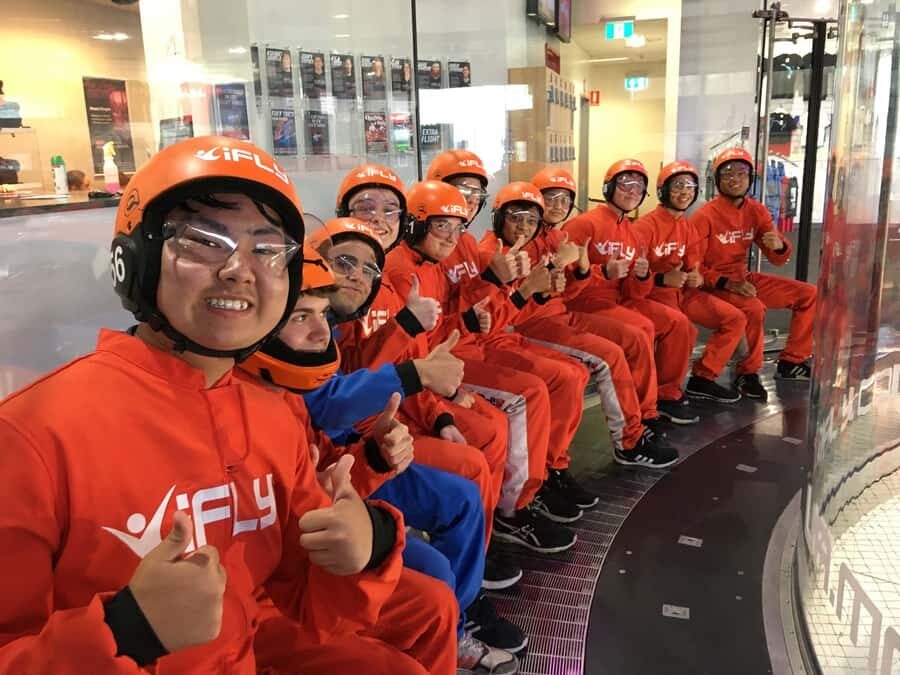
This activity shines for people who want a real physical thrill and like learning hands-on skills. You’ll probably enjoy it most if you’re:
- Curious about the sensations of free-fall, but want it in a controlled setting
- Traveling with family and want a shared activity that feels active, not passive
- A kid who’s at least 3 years old (as long as the session is suitable for your age requirements)
- Someone who wants to face the fear factor in a guided way
It may not be for you if you:
- Have the listed health constraints (heart, pregnancy, back issues, shoulder dislocations)
- Expect a long, repetitive training program
- Want a totally solo experience (it’s instructor-led and designed around a small group flow)
And if you’re tall or near the weight limit, plan to confirm eligibility early so you’re not surprised on arrival.
Should You Book This Indoor Free-Fall Flight in Sydney?
I’d book it if you want a high-adrenaline experience with real instruction and two chances to fly. At $84 per person, you’re buying more than a quick stunt—you’re buying coaching, equipment, and a take-home certificate, all wrapped in a controlled environment.
I’d think twice if you’re dealing with heart issues, pregnancy, back or neck injuries, or shoulder dislocations. In those cases, this isn’t a “try it and see” moment.
If you’re on the fence, here’s my practical rule: if you can arrive early, wear comfortable clothes, and you’re medically cleared to fly, this is one of those activities that turns nerves into confidence fast.
FAQ
Where is this experience in Sydney?
It runs in New South Wales, Australia, at iFLY Indoor Skydiving AU.
How long is the session?
The duration is about 90 minutes.
How much does it cost?
It costs $84 per person.
How many flights do I get?
You get 2 flights per person.
What’s included in the price?
The package includes 2 flights for 1 person, a comprehensive training session, equipment rental, hands-on personal assistance from your flight instructor, and a personalized flight certificate.
What should I wear and bring?
Wear comfortable clothes and closed-toe shoes. You’ll also need to arrive early enough for the briefing and gear-up.
Is it suitable for children?
It is not suitable for children under 3 years. It’s described as a whole-family activity, including kids.
Are there height and weight limits?
Yes. If you are under 180 cm tall, you must weigh less than 105 kg. If you are over 180 cm tall, you must weigh less than 115 kg. There is also guidance that it’s not suitable for people over 230 lbs (104 kg).
Who should avoid flying?
It’s not suitable for pregnant women and for people with back problems or heart problems. If you have prior heart problems, neck, or back injuries, you should consult a doctor. People with previous shoulder dislocations are strongly advised not to fly.
Can I cancel or pay later?
You can cancel up to 24 hours in advance for a full refund. You can also reserve now and pay later.
You Might Also Enjoy
More Tour Reviews in Sydney
- Blue Mountains Small-Group Tour from Sydney with Scenic World,Sydney Zoo & Ferry
★ 5.0 · 3,709 reviews