REVIEW · SYDNEY
Sydney Origin Story Walk in The Rocks
Book on Viator →Operated by Bloody Interesting Tours · Bookable on Viator
The Rocks has a meaner story than you expect. This walk turns street corners into scenes, with gritty convict-era tales told with dark humour and cinematic energy. You’ll hear real stories of survival, corruption, sly grog, scandal, and what people did to get by—right where it happened.
What I like most is how you get both atmosphere and specifics: Cadman’s Cottage and the stonework around you do the talking, while your guide connects the dots. I also love the food add-ons—wattleseed ANZAC cookies and lemon myrtle tea—because they make the past feel sensory, not just narrated.
One thing to consider: this is a 2.5-hour walking experience. If you’re not comfortable with steady walking and a lot of standing for views and stories, plan for slower breaks and wear comfy shoes.
In This Review
- Key things to know before you go
- Why The Rocks feels different when the stories are live
- Price and value: what $48.77 buys you
- Meet Ed: the guide who keeps convict stories funny and clear
- Cadman’s Cottage: where Sydney’s earliest residents got their start
- The Argyle: a convict-hewn tunnel you can practically feel
- Foundation Park: the sandstone ruins that show poverty without gloss
- Campbells Cove: harbour history plus the kind of view that resets your brain
- Playfair Street: preserved colonial buildings along a street you’d otherwise speed past
- Dawes Point Park: the Harbour Bridge viewpoint with a military past
- Suez Canal: sly grog, brothels, and push gangs in a narrow alleyway
- What the included tastings add (and when to expect them)
- Walking reality: how to plan your day around 2 hours 30 minutes
- Who this tour is best for
- Should you book Sydney Origin Story Walk in The Rocks?
- FAQ
- Where is the tour meeting point?
- What time does the tour start?
- How long is the Sydney Origin Story Walk in The Rocks?
- How large is the group?
- What food is included on the tour?
- Is the tour affected by weather, and can I get a refund if it is?
Key things to know before you go
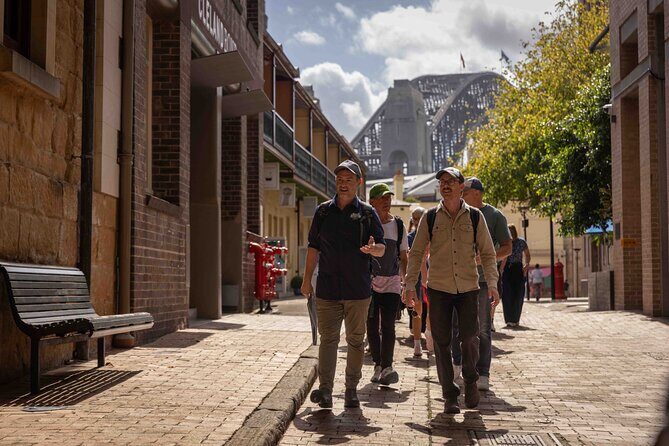
- Small group, max 10 people: easier conversation and more back-and-forth with your guide
- A guide named Ed: professional storyteller with former TV director experience and sharp comedic timing
- Food included: wattleseed ANZAC cookies and lemon myrtle tea add a local flavour layer
- Stops at convict and harbour sites: Cadman’s Cottage, the Argyle tunnel, Dawes Point and more
- Dark humour, real locations: history isn’t sanitised, and you see the physical traces up close
- Good weather matters: the tour runs best when conditions are safe and comfortable
Why The Rocks feels different when the stories are live
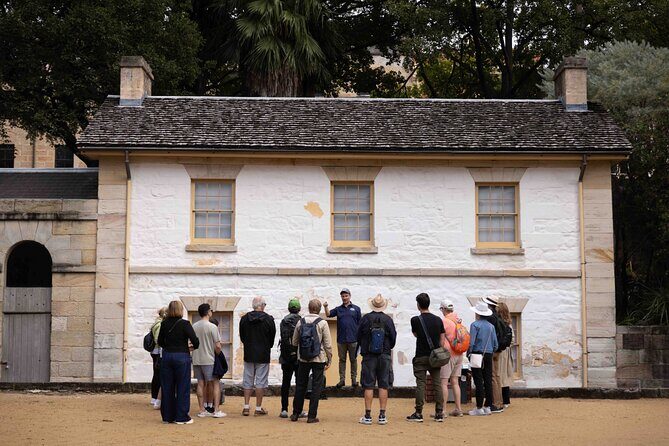
The Rocks is one of those places where you can walk past something old and still miss what it meant. On this tour, you don’t. The guide’s style is part theatre, part guided research—short scenes, clear context, and then you’re moving on to the next spot before the moment gets dull.
You’ll be walking through a built environment that still shows its age. That’s the secret sauce here: instead of learning from a board, you read the place with your eyes. Stonework, tunnels, street alignments, and lookout points all connect to how people lived, worked, fought, and quietly survived.
This is especially good if you like history that has edges. Expect dark humour, scandal, and underworld details—told in a way that stays grounded in what the buildings and terrain can actually support.
You can also read our reviews of more walking tours in Sydney

Price and value: what $48.77 buys you
At $48.77 per person for about 2 hours 30 minutes, you’re paying for more than a stroll. The value is in three places.
First, you’re getting a small-group format (up to 10 people). That matters in a storytelling walk. Bigger groups dilute the pacing and the chance to ask questions.
Second, several of the stops are listed with admission ticket free, so you’re not layering surprise entry fees on top. That helps you feel in control of your total day cost.
Third, the tour includes native food tastings: wattleseed ANZAC cookies and lemon myrtle tea. Even if you’re not a foodie, this is a thoughtful local touch that makes the experience feel more like Australia—not just a generic “old town” walk.
Meet Ed: the guide who keeps convict stories funny and clear
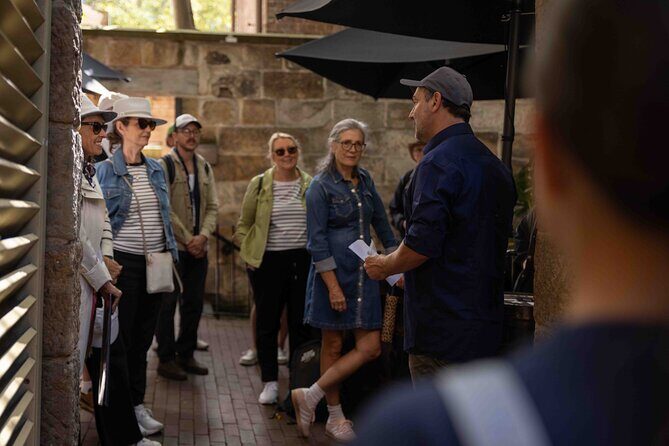
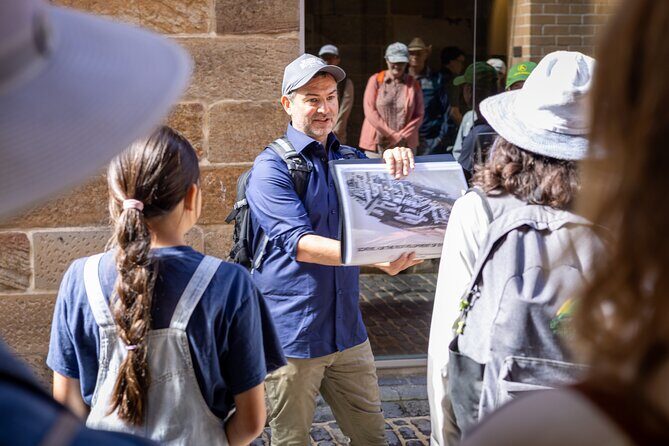
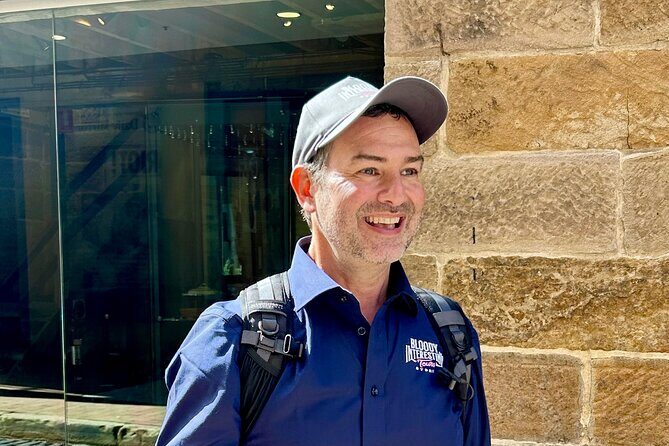
Ed is the type of guide who can hold attention without turning every fact into a lecture. The tour leans on his background—he’s a former TV director as well as a professional guide—and you feel that in how he lands key details like story beats.
He also seems to understand timing. You’ll get enough context to follow the bigger picture, then the story lands at a specific location: a building, a tunnel, a ruined site, a harbour viewpoint. That keeps the walk from becoming scattered and makes the dark humour feel purposeful, not random.
If you want history you can actually remember later, this style helps. The jokes make it stick, and the setting makes it believable.
Cadman’s Cottage: where Sydney’s earliest residents got their start
You kick off at Cadman’s Cottage, described as Sydney’s oldest surviving residential building and a convict base. Even if you’ve seen photos of the site, seeing it in person gives it weight. Old buildings don’t just look “historic”—they show scale, wear, and how people used space under real pressure.
What I like about starting here is that it sets the tone without needing a long warm-up. You’re in The Rocks, you’re in the convict-era context, and your guide can start weaving the bigger story right away.
Possible drawback: because you start with a major anchor site, if you’re the type who prefers to slowly ramp up, you might feel like the tour hits its stride fast. It’s still paced well overall, but it’s an immediate hook.
The Argyle: a convict-hewn tunnel you can practically feel
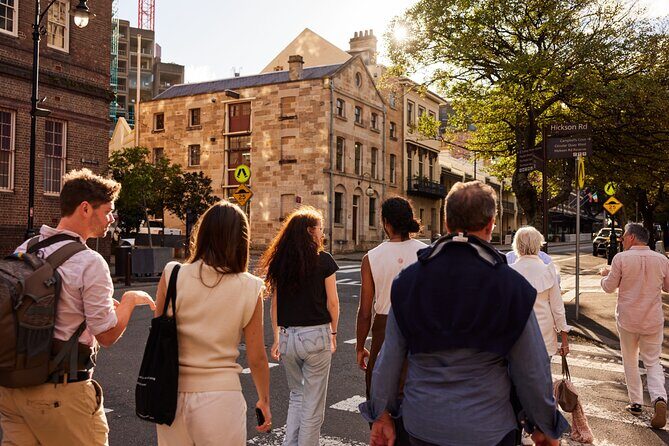
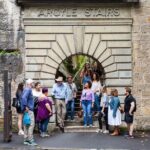
Next comes The Argyle, a dramatic convict-hewn tunnel linking Millers Point and The Rocks. Tunnels change how sound works and how your body reads space. Even a short stretch can feel claustrophobic compared to open streets, and that matters when you’re trying to picture what people did there.
Your guide uses the physical route to explain why such passages mattered—movement, secrecy, and survival. The payoff here is that you stop thinking of The Rocks as just “cute old streets.” It becomes a working system, including the under-surface parts you’d never notice on your own.
This is also one of those stops where the storytelling style is a real advantage: a tunnel is a tunnel unless someone teaches you what to look for. Ed gives you that “what to look for” lens.
- Blue Mountains Small-Group Tour from Sydney with Scenic World,Sydney Zoo & Ferry
★ 5.0 · 3,709 reviews


Foundation Park: the sandstone ruins that show poverty without gloss
At Foundation Park, you’ll see sandstone ruins tied to a former slum. This is the part where the tour becomes more than colourful character sketches. Ruins like these are blunt. They don’t need humour to make their point.
What makes this stop valuable is the way it adds social texture. Convicts, corruption, and underworld drama are only part of the settlement story. Slum conditions show what happened to ordinary people once the harbour economy and punishment system tangled together.
One practical consideration: because this is a ruin site, footing and viewing angles can be a bit uneven. Bring shoes with grip, and don’t rush your photos. Slow down and look at the stone patterns; they help you “read” the place.
Campbells Cove: harbour history plus the kind of view that resets your brain
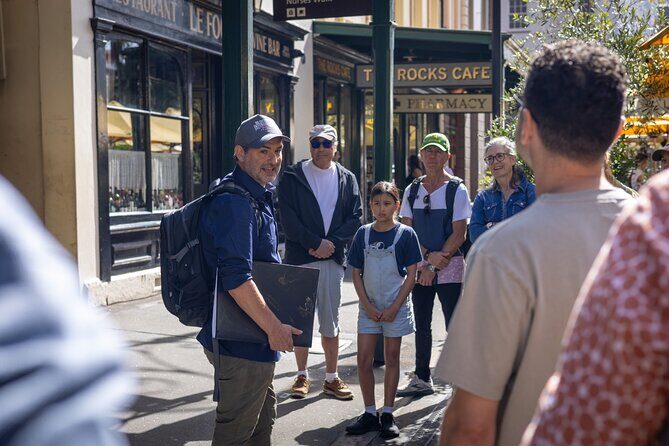
Then you shift from ruins to open water at Campbells Cove, known for prime harbour views and colonial shipping history. This stop is a nice pacing reset. After darker, tighter spaces, you get the wider horizon and the practical reality of why the harbour mattered.
When you can see the water and imagine old shipping routes, the stories about trading, movement, and power make more sense. You’re not just hearing about settlement logistics—you can see how the geography would shape them.
If you’re the kind of person who likes your history grounded in real places, this is one of the most satisfying spots on the walk.
Playfair Street: preserved colonial buildings along a street you’d otherwise speed past
At Playfair Street, the focus is on iconic thoroughfares lined with preserved colonial buildings. This stop works well because it’s visual. You get time to look up and scan the streetfronts, noticing how old structures survived long enough to become part of today’s streetscape.
What I like here is that it’s not only about big-ticket history. It’s about the everyday layer: how the street layout and building survival shape what people experience now.
If you love “street archaeology,” this is where you’ll start seeing The Rocks as a living map of earlier decisions—where people built, where they kept access, and what got preserved through change.
Dawes Point Park: the Harbour Bridge viewpoint with a military past
Next is Dawes Point Park, described as the former site of the colony’s first gun battery. Today, it’s a peaceful lookout under the Harbour Bridge, but the story behind it is anything but calm.
Your guide connects what you see now—open viewlines and a calm public space—with what the site was built to do. Military history can be dry, but paired with a viewpoint, it becomes practical. You start understanding why elevated spots, clear sightlines, and strategic placement mattered.
There’s also a strong emphasis on Gadigal and military history tied to the area. If you pay attention here, you’ll leave with a more complete sense of how this place carried many kinds of meaning over time.
Suez Canal: sly grog, brothels, and push gangs in a narrow alleyway
Finally, you head to Suez Canal, an alleyway once known for sly grog, brothels, and push gangs. The name alone makes this stop feel like a legend, but what you get on the walk is the grounded explanation for how a narrow lane became a high-stakes survival space.
Dark humour fits here because the setting supports it: alleyways don’t feel neutral. They feel purposeful, designed for quick movement, private exchanges, and people staying out of sight.
This is also one of the best stops for learning what you’d never guess from the street in daylight. Without the guide’s framing, Suez Canal could look like just another lane. With it, it becomes an underworld shortcut in your imagination—then you step back into the real street and realise how close the past is.
What the included tastings add (and when to expect them)
You’ll taste native flavours during the tour, specifically wattleseed ANZAC cookies and lemon myrtle tea. This is more than a snack. It turns the experience from purely visual and auditory into something you can taste, which helps memory stick.
Also, these items feel tied to local Australian ingredients rather than generic “tourist treats.” That makes the whole walk feel like it belongs in Sydney.
If you have allergies or dietary restrictions, you’ll want to check before you go, because the tour data only specifies what’s included, not how substitutions are handled.
Walking reality: how to plan your day around 2 hours 30 minutes
This is a morning start at 9:30 am, beginning at 107 George St, The Rocks NSW 2000, and finishing back in The Rocks. With about 2 hours 30 minutes on your feet, it’s long enough that you’ll feel it by the end—especially if you’re stopping for photos.
To get the best experience:
- Wear comfy shoes with grip.
- Bring a small water bottle if you need it.
- If the weather is hot or windy, plan to slow down and let the guide’s pauses work for you, not against you.
Because the tour requires good weather, keep your expectations flexible if conditions change. If it’s cancelled for poor weather, you’ll be offered a different date or a full refund.
Who this tour is best for
I’d book this if you want a The Rocks walk that feels like a story with facts, not facts without personality. It’s a great fit for:
- People who like history but get bored by lectures
- Anyone who wants to see convict-era Sydney through real locations
- First-timers in Sydney who want a smarter way to understand the city’s beginnings
It’s also a good match if you enjoy humour with an edge—because the tone is part of what makes it memorable.
Should you book Sydney Origin Story Walk in The Rocks?
If you’re excited by convict tales, harbour geography, and the idea of learning through street-level storytelling, I think this is a strong choice for Sydney. The combination of small-group pacing, real-world stops, and included native tastings makes the $48.77 feel reasonable rather than like a “paying for the brand” situation.
I’d skip it or rethink if you want a quiet, academic walk, or if you struggle with sustained walking for roughly 2.5 hours. Otherwise, you’ll likely walk away with a sharper, stranger, more human sense of how The Rocks became what it is.
FAQ
Where is the tour meeting point?
You meet at 107 George St, The Rocks NSW 2000, Australia.
What time does the tour start?
The start time is 9:30 am.
How long is the Sydney Origin Story Walk in The Rocks?
The duration is about 2 hours 30 minutes.
How large is the group?
This experience has a maximum of 10 travelers.
What food is included on the tour?
You’ll taste wattleseed ANZAC cookies and lemon myrtle tea.
Is the tour affected by weather, and can I get a refund if it is?
The tour requires good weather. If it’s cancelled due to poor weather, you’ll be offered a different date or a full refund.
You Might Also Enjoy

More Walking Tours in Sydney


More Tour Reviews in Sydney
- Blue Mountains Small-Group Tour from Sydney with Scenic World,Sydney Zoo & Ferry
★ 5.0 · 3,709 reviews