REVIEW · SYDNEY
Sydney Queer Walking Tour
Book on Viator →Operated by Queer Sydney Walking Tour · Bookable on Viator
Queer Sydney hits different on foot. This 2-hour walking tour links colonial-era queer traces to the moments that shaped modern Mardi Gras and activism. You’ll walk away with a clearer sense of how hidden stories surface and why the city’s queer community fought to be seen.
I really like two things: the way the tour makes queer history feel specific instead of vague, and the guide-led storytelling that stays engaging the whole way. One review calls out Michael as especially knowledgeable and able to keep the group locked in. A small consideration: this is a story-heavy walk, so if you want mostly party vibes with zero context, you might find parts of it heavy.
In This Review
- Quick hits: what makes this tour worth your time
- Entering the story at the Archibald Memorial Fountain
- Whitlam Square and the Emden Gun: where the 1970s turned into momentum
- Darlinghurst backstreets and Green Park: hearing the HIV story with real context
- Taylor Square and Kinselas Hotel: June 1978 and why Mardi Gras still matters
- What you learn beyond the parade: indigenous views, colonial traces, and reforms
- Price and timing: $53.79 for a focused 2-hour route
- Practical tips for getting the most from the walk
- Should you book the Sydney Queer Walking Tour?
- FAQ
- How long is the Sydney Queer Walking Tour?
- Where does the tour start and end?
- What’s the group size limit?
- Is the ticket mobile?
- Is the tour good for most people?
- Can I get a full refund if I cancel?
Quick hits: what makes this tour worth your time
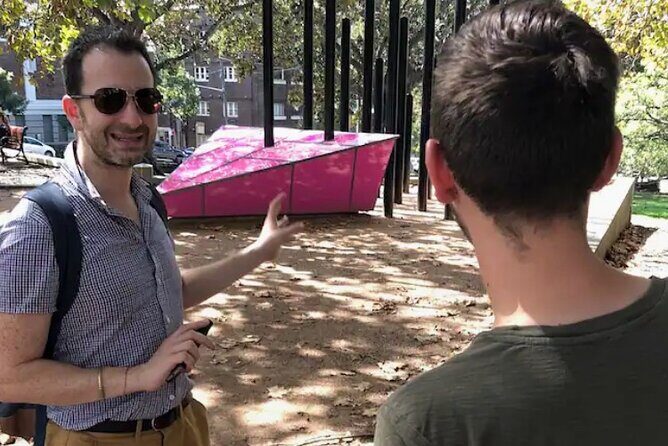
- A 2-hour, max 12-person group means you can actually hear and ask questions.
- Stops across Darlinghurst and the CBD connect everyday streets to big turning points.
- Mardi Gras 1978 gets treated as local history, not just a parade headline.
- HIV-era impact is directly addressed in a way that helps you understand the stakes.
- Coffee/tea break along the way keeps the pace friendly without turning it into a food tour.
- Mobile ticket format makes it easier to get moving fast.
Entering the story at the Archibald Memorial Fountain
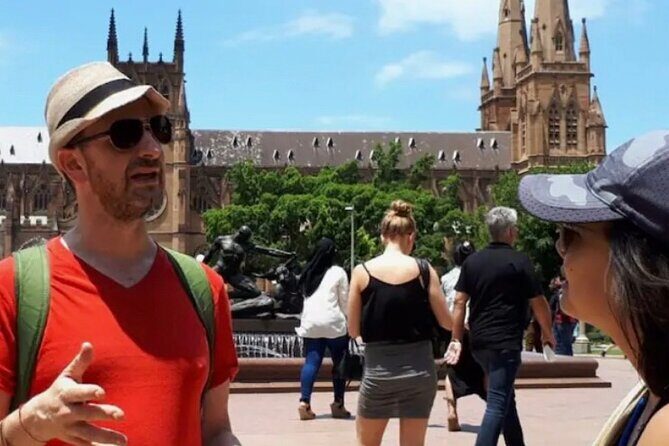
The tour starts at the Archibald Memorial Fountain at the Law Courts Library area, and that choice is smart. Public art and major landmarks often get treated like background scenery, but here they’re used as a doorway into what’s easy to miss.
At this first stop, you’ll hear about hidden queer histories reaching from colonial times through to the 1970s. The point isn’t just the facts. It’s the idea that absence has a reason. Laws, social pressure, and silence shaped what got recorded and what got erased, so you learn to pay attention to what’s not obvious at street level.
You’ll also get a framing that matters for the rest of the walk: the tour touches on indigenous Australia’s view of diverse sexual orientation and gender, then follows the colonial period into the early 20th century. Even if you’ve read bits of queer history before, this structure helps you understand how different time periods handled identity—often with very different levels of visibility and acceptance.
One tip before you walk: keep your questions simple. If something feels unclear—dates, names, or how a particular event connects to the bigger movement—this tour format is built for getting those pieces sorted while you’re still in the flow.
You can also read our reviews of more walking tours in Sydney
Whitlam Square and the Emden Gun: where the 1970s turned into momentum
From the fountain, you move to Whitlam Square for the Emden Gun stop. This is where the tour leans into the shift from scattered lives and local communities into broader public arguments for rights.
Here, you focus on the 1970s as the beginning of the gay rights era making claims for fairness and equality. One of the most useful parts is how the tour explains the role of the media. That matters, because rights movements don’t grow only through policy. They grow through visibility—who gets talked about, who gets ignored, and which stories reach enough people to change public opinion.
The Emden Gun area becomes more than a monument. You’re learning to read the city as a political stage. You can look at the surroundings and think, What kind of message would land here in the 1970s? Who would have seen it, and who would have dismissed it?
Possible drawback to consider: if you prefer fast, light storytelling with minimal social context, the media-and-politics angle may feel more cerebral than you expect. But that same angle is exactly what makes the later Mardi Gras and protest decades easier to understand.
Darlinghurst backstreets and Green Park: hearing the HIV story with real context
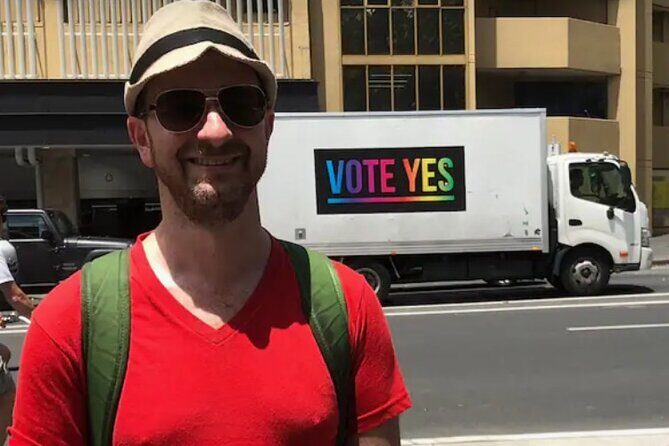
Next, the walk shifts into Darlinghurst’s backstreets and heads toward Green Park. This part of the tour is built for pace. You’ll have a coffee or tea stop along the way, which is not just a comfort break—it gives your brain space to process heavier history.
At Green Park, the tour considers how Sydney handled the HIV epidemic. This is one of the places where understanding the past can feel practical. HIV-era public fear, misinformation, and policy failures didn’t just affect medical outcomes. They shaped safety, employment, family conversations, and how quickly people could access care or community support.
The tour’s value here is that it doesn’t treat HIV as a standalone tragedy. It connects it to the wider arc of reforms that surged into the mainstream from the 1970s onward. You hear how protest and partying weren’t separate from activism—they were part of a community trying to survive, claim space, and push back against stigma.
If you’re the kind of traveler who likes to see neighborhoods through a more human lens, this stop is especially worthwhile. Green Park helps you slow down in a part of Sydney that still feels layered: daytime life and local café energy on one side, and deeper stories on the other.
What to watch for: since you’re in smaller streets, keep an eye on where the group is heading. It’s easy to get distracted by the café break and then lose the timing.
Taylor Square and Kinselas Hotel: June 1978 and why Mardi Gras still matters
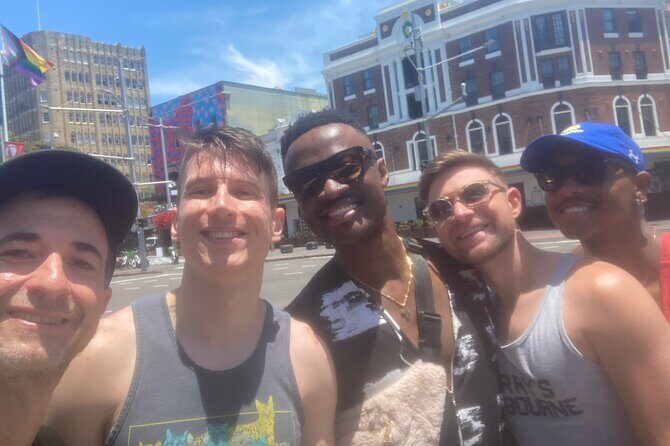
The final stop lands at Taylors Square, tied directly to Kinselas Hotel. This is the part of the tour that many people come for, and it deserves its place.
You’ll discuss what happened in June 1978 at the spot connected with the first Mardi Gras, and why that moment still calls to queer Sydney today. Instead of treating Mardi Gras as a yearly spectacle you watch from the sidelines, this stop frames it as a local, collective turning point.
This is also where the tour connects the dots across decades. You hear about social upheaval reforms bursting into the mainstream from the 1970s onwards, then the following years of protest, partying, and community life under pressure. The lesson is clear: Mardi Gras wasn’t only celebration. It was confrontation—visible, public, and unapologetic.
Walking toward Taylor Square as you near the end, you can almost feel how the city’s energy changed over time. Today you’ll likely see plenty of movement, shoppers, and nightlife. The tour helps you read that energy as something that was fought for, not magically granted.
Practical note: the walk ends at Sydney Sustainable Markets at Taylor Square (Oxford Street at the intersection with Bourke Street). That’s convenient if you want to keep exploring afterward, grab a snack, or connect to public transport.
What you learn beyond the parade: indigenous views, colonial traces, and reforms
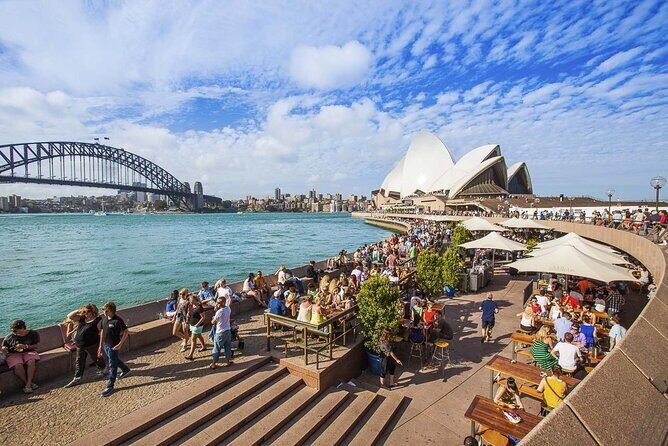
A lot of queer-themed tours focus on the loud public parts—parades, famous names, big anniversaries. This one does that too, but it also covers the quieter backbone you need to understand the big moments.
You’ll hear how the tour looks at indigenous Australia’s view on diverse sexual orientation and gender, then moves into queer forebears during the colonial period and into the early 20th century. That range helps you see that queer history isn’t only something that starts when documentation becomes easier. It shows how identity existed across time, even when society tried to reduce it to silence.
Then the story accelerates into the 1970s onward: the social upheaval reforms that broke into mainstream life, the significance of the first Mardi Gras in 1978, and the decades that followed—protest, partying, and the reality of the HIV epidemic.
For you, that structure means you don’t just memorize dates. You understand a pattern: visibility increases, backlash appears, communities adapt, and cultural life keeps evolving. Mardi Gras sits inside that pattern, not above it.
One more thing: since the stops are mostly exterior, sidewalk, and public-space moments, the tour encourages you to relate the stories to what you can actually see in front of you. That’s a different feeling than reading labels in a museum.
- Blue Mountains Small-Group Tour from Sydney with Scenic World,Sydney Zoo & Ferry
★ 5.0 · 3,709 reviews
Price and timing: $53.79 for a focused 2-hour route
The price is $53.79 per person, and the best way to judge it is by what you’re paying for: a 2-hour guided walking experience with multiple historically meaningful locations, limited to a small group.
At about 2 hours (approx.), this is a good use of a morning, especially since the tour starts at 9:30 am. That timing matters in Sydney. Morning light helps you enjoy the streets, and you’ll often be done before the city gets too hectic.
You’re also not paying extra for admissions at each stop in the way you would for ticketed attractions. The tour’s approach is about interpretation in real-world locations. So in value terms, you’re paying for guidance, context, and pacing—not for entry fees and queues.
The max group size of 12 travelers is a big deal. It typically means better audio, less rushing, and more room to hear names, dates, and connections without your brain getting overwhelmed.
If you’re deciding whether to add this to your schedule, consider your own style:
- If you like walking tours that explain what you’re looking at, it’s strong value.
- If you hate structured walking or want long breaks, you may wish you had more time.
Practical tips for getting the most from the walk
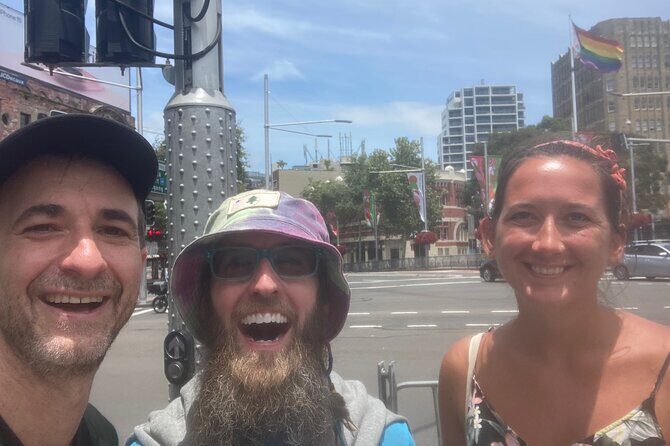
This is a straightforward walking format, but a few small choices can make it feel better.
Wear comfy shoes. The route includes backstreets in Darlinghurst, and you’ll want to stay steady without thinking about your feet every few minutes.
Bring a light layer if the weather shifts. Even if the tour is only about 2 hours, you’ll be outside for the whole time.
Because this is a mobile ticket experience, make sure your phone is charged and you’ve got the ticket ready before you arrive.
Since the tour uses public spaces, it also helps to arrive a few minutes early so you can find the meeting point without stress. The start is at Law Courts Library, 184 Phillip St, Sydney NSW 2000. The end is at Sydney Sustainable Markets, Taylor Square area—Oxford Street at Bourke Street—so plan your next stop with that in mind.
And if you’re sensitive to heavy topics: part of the tour addresses the HIV epidemic. You don’t need to avoid it, but it helps to mentally prepare so you can take in the story at a comfortable pace.
Should you book the Sydney Queer Walking Tour?
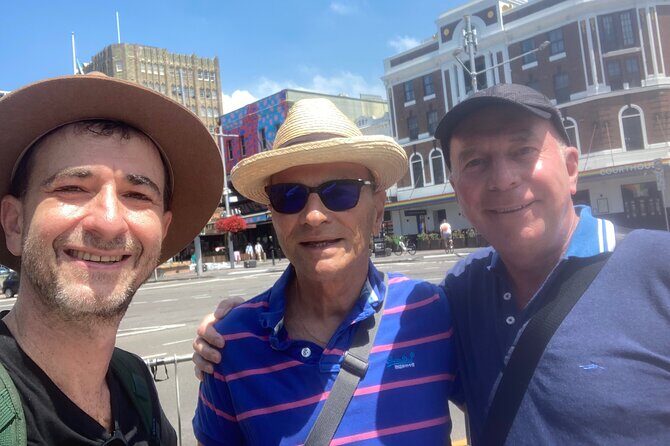
I’d book it if you want a guided walk that connects Sydney’s queer story across eras—colonial traces, the rights momentum of the 1970s, the significance of June 1978 Mardi Gras, and the HIV-era reality that shaped community life.
I’d skip or reconsider if you’re looking for a purely celebratory, party-first experience with minimal context. This tour is about understanding. It includes celebration, but it’s grounded in what people had to fight for and survive.
Also, if small groups matter to you, this one fits. A max of 12 travelers and a start time that lets you finish by mid-morning makes it easier to slot into a day of exploring.
FAQ
How long is the Sydney Queer Walking Tour?
It’s approximately 2 hours.
Where does the tour start and end?
It starts at Law Courts Library, 184 Phillip St, Sydney NSW 2000, and ends at Sydney Sustainable Markets, Taylor Square (Oxford Street at the intersection with Bourke Street), Darlinghurst NSW 2010.
What’s the group size limit?
The tour has a maximum of 12 travelers.
Is the ticket mobile?
Yes, it uses a mobile ticket.
Is the tour good for most people?
It says most travelers can participate.
Can I get a full refund if I cancel?
Yes. Free cancellation is available if you cancel at least 24 hours before the experience’s start time for a full refund. If you cancel less than 24 hours before, you won’t receive a refund.
You Might Also Enjoy



More Walking Tours in Sydney
More Tours in Sydney
- Blue Mountains Small-Group Tour from Sydney with Scenic World,Sydney Zoo & Ferry
★ 5.0 · 3,709 reviews
More Tour Reviews in Sydney
- Blue Mountains Small-Group Tour from Sydney with Scenic World,Sydney Zoo & Ferry
★ 5.0 · 3,709 reviews