REVIEW · SYDNEY
Sydney Walking Tour including The Rocks (small group)
Book on Viator →Operated by Sydney's Wonders Tours · Bookable on Viator
Sydney history is easier when it walks with you. This small-group Sydney tour strings together major sights from Hyde Park to The Rocks, with guide-led stories that stretch from Indigenous culture to convict days and modern city life. You also get a tight group size (max 16), so it actually feels like a conversation, not a cattle-car lecture.
I love that the tour hits the big landmarks and the side streets in the same loop. You’ll get Hyde Park Barracks (a UNESCO site tied to convicts and later immigration) and then move into The Rocks’ cobblestones and lanes, where the setting helps the stories stick.
One consideration: it’s still a walking tour. Even with breaks and a guide pacing the group, you’ll be on your feet for about 2.5 hours, so plan for comfortable shoes and a slow start if you’re sensitive to heat.
In This Review
- Key Things to Know Before You Go
- From Hyde Park to The Rocks: The Tour’s Simple Power
- Your Starting Point: Archibald Memorial Fountain in Hyde Park
- Hyde Park Essentials: Green Space, Memorials, and a Quick Reset
- St. Mary’s Cathedral: A European-Style Landmark in Sydney
- Hyde Park Barracks: Convict to Immigration, in One UNESCO Site
- Queen’s Square and the Legal Precinct: Where Power Shows
- Rum Hospital at Sydney Eye Hospital: The Story Behind the Name
- Macquarie Street: Government and Parliament in Motion
- Royal Botanic Garden Sydney: A Garden With Aboriginal Connections
- Old Government Stables and the Conservatorium: Horses, Then Music
- The Edge of the Trees: A Public Reminder of Shared Territory
- Macquarie Place Park and Customs House: First Public Space to Trade Heart
- The Rocks Core: Cobblestones, Lanes, and Convict-Linked Stories
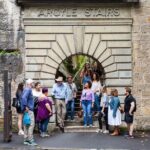
- Suez Canal, Nurses Walk, Playfair Street, Argyle and George: Underworld to Early Women
- Campbells Cove Finish: Harbor Views and a Low-Stress Landing
- Group Size, Pacing, and Physical Reality
- Price and Value: $32.28 for 2.5 Hours of City Context
- Who This Tour Is Best For
- Should You Book This Sydney Walking Tour?
- FAQ
- How long is the Sydney Walking Tour including The Rocks (small group)?
- Where does the tour start and where does it end?
- How many people are in the group?
- How much does it cost?
- Is the tour walkable for someone with moderate fitness?
- What is the cancellation window?
Key Things to Know Before You Go
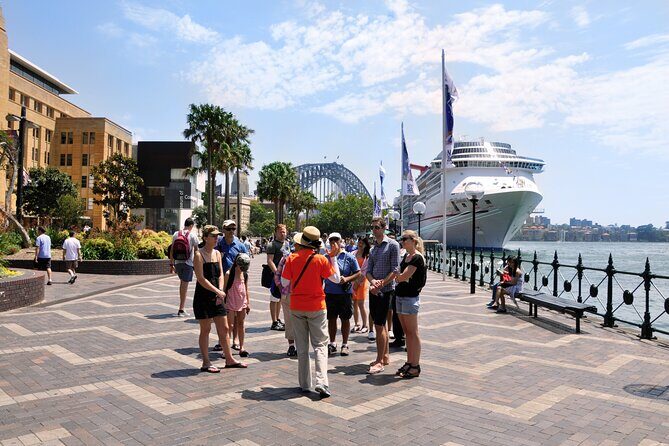
- Small group cap (16 people): easier questions, better hearing, and less waiting around.
- Stops with free public access: Hyde Park, cathedrals, The Rocks lanes, and other sights are listed as free entry, so your money goes mainly to the guide.
- Convict-era context you can place: Hyde Park Barracks plus The Rocks streets gives you a clearer sense of where events happened.
- Indigenous and colonial history in the same route: you’ll pass public art and key city sites that connect those threads.
- Hyde Park to Campbells Cove finish: end near Circular Quay, with an easy path to lunch and transit.
- Guides that watch the pace and the weather: reviews highlight heat awareness and shade when possible.
From Hyde Park to The Rocks: The Tour’s Simple Power
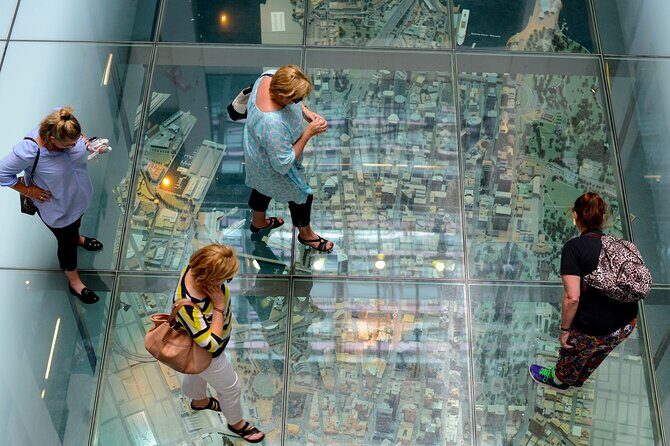
This tour is built like a timeline you can follow on foot. You start in Hyde Park, work your way through central Sydney’s civic and colonial landmarks, then wind into The Rocks where the city’s early layers still show on the street.
The best part is the flow. You’re not bouncing between far-apart neighborhoods. Instead, you get a logical progression: green space and memorials in Hyde Park, then major institutions and historic buildings, then trade and convict-era remnants, and finally the harbor edge at Campbells Cove.
And because the group is limited to 16, the tour doesn’t feel rushed. Reviews mention guides like Lily and Leilani setting a comfortable pace and making sure everyone could hear—something that matters a lot on tours that depend on listening, not just sightseeing.
You can also read our reviews of more walking tours in Sydney

Your Starting Point: Archibald Memorial Fountain in Hyde Park
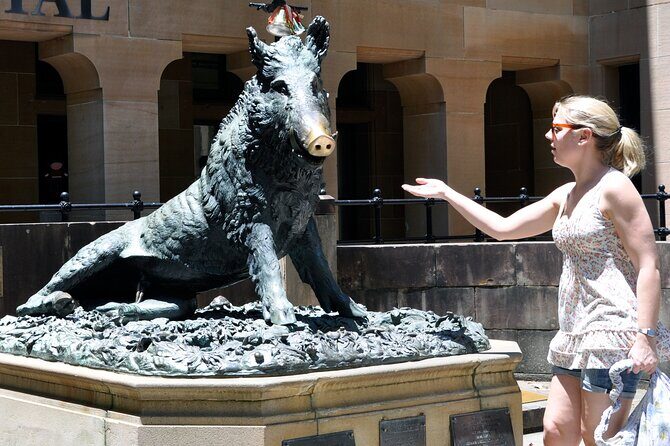
The meeting point is the Archibald Memorial Fountain in Hyde Park North, right by Elizabeth Street. Starting here is smart. Hyde Park is a natural staging area, and it immediately gives you the first clue about the city’s priorities: public space, monuments, and civic identity all packed into one central location.
Right away, you’re oriented in a way that makes the later stops easier to understand. When your guide begins talking through the park’s role and the surrounding landmarks, you get a “where am I” framework that helps the rest of the walk feel coherent instead of random.
If you want to do what locals do, arrive a few minutes early and do a quick loop around the fountain area. You’ll be less flustered once the group gathers.
Hyde Park Essentials: Green Space, Memorials, and a Quick Reset
Hyde Park is more than a pretty pause between streets. It’s described as Australia’s oldest park, which alone makes it worth anchoring your first impressions of the city here. You’ll also spend a few minutes spotting notable statuary and the Anzac Memorial area (the tour specifically calls it out).
What I like about starting with Hyde Park is the mental reset. By the time you reach the cathedral, barracks, and law precinct, you’re walking with a calmer head instead of feeling like you jumped from tram stop to tram stop.
Practical tip: bring water and sun protection. One review specifically recommends sunscreen and a hat, and another highlights how the guide handled heat by looking for shade where possible.
St. Mary’s Cathedral: A European-Style Landmark in Sydney
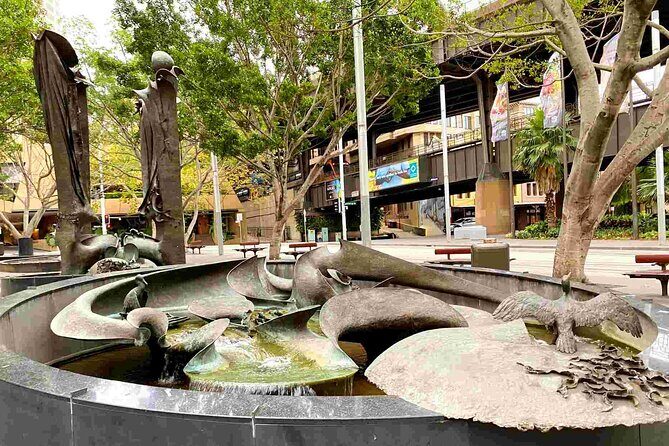
Next up is St. Mary’s Cathedral. It’s presented as a major symbol of Sydney’s Catholic heritage, with Gothic architecture that reminds people of grand cathedrals in Europe.
This stop is brief, but it works as a contrast piece. Hyde Park gives you memorials and public space; St. Mary’s gives you architecture and faith at scale. Even if you only spend a short time here, you’ll likely notice details you’d skip on your own—especially if your guide explains what you’re looking at.
If you’re sensitive to loud interiors or large crowds, plan to stay close to the guide during the stop. The key is to keep moving and not lose track of the group.
Hyde Park Barracks: Convict to Immigration, in One UNESCO Site
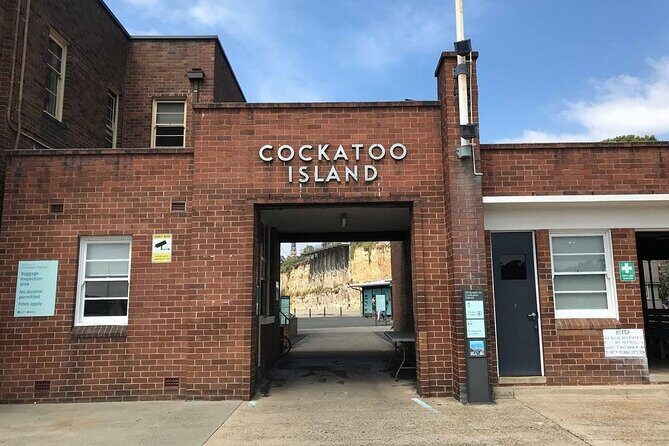
This is one of the anchor stops. Hyde Park Barracks is a UNESCO World Heritage site, and the tour frames it as both a convict prison and later an immigration depot.
That “two-phase” story is the value. It’s not just convict myth or vague history—you get a sense of how the same location kept getting repurposed as the colony changed. When you later reach The Rocks, the convict theme stops feeling like a separate chapter. It becomes part of a larger pattern of city-building.
If you like history but don’t want to sit in museums for hours, this kind of timed, guided stop is a strong middle ground.
- Blue Mountains Small-Group Tour from Sydney with Scenic World,Sydney Zoo & Ferry
★ 5.0 · 3,709 reviews




Queen’s Square and the Legal Precinct: Where Power Shows
Then the route shifts into Queen’s Square, surrounded by major government and legal buildings, including the Supreme Court and the Law Courts Building.
This part matters because it shows another side of Sydney: not just survival and punishment, but authority and institutions. You’re not only learning about who suffered or who arrived—you’re also seeing how law and governance shaped what the city became.
It’s a short stop (the schedule keeps it to around five minutes), but it helps you connect the dots when you later look at old streets and think, who decided this, who built this, and who benefited.
Rum Hospital at Sydney Eye Hospital: The Story Behind the Name

One of the more fun, specific points on the tour is Sydney Eye Hospital, described as the Rum Hospital and built through a deal involving rum.
That kind of story is exactly why guided walking tours beat guidebooks. You can read the name on your phone; you won’t get the background that makes it memorable. Rum Hospital turns an old building into a clue about how early settlers financed public health and how trade money could shape everyday life.
When the guide explains how that deal worked and why the hospital existed, the site stops being just architecture. It becomes a snapshot of barter logic and survival economics.
Macquarie Street: Government and Parliament in Motion
Macquarie Street is next, treated as the heart of Sydney’s power and history. You’ll walk past architectural highlights and major civic buildings, with the tour specifically mentioning Parliament House and Government-related areas.
Even if you’re not a political history buff, this stretch helps you understand the city’s layout. Sydney’s early decisions weren’t made in isolation—they were tied to the buildings that still frame street views today.
Keep an eye out for the kinds of details you’d normally zoom past: uniform facades, monumental entrances, and the way streets widen or narrow around key institutions.
Royal Botanic Garden Sydney: A Garden With Aboriginal Connections
The tour includes a stop at the Royal Botanic Garden Sydney, described as having a deep connection to Aboriginal culture and featuring diverse plant life from Australia and around the world.
This is a nice change of pace, especially after civic streets. Gardens slow you down. They also create a moment where the guide can talk about land, plants, and how people relate to place over time.
Even though the scheduled stop is short, you’ll likely leave with a reason to return on your own later—especially if you enjoy walking through curated space with historical context.
Old Government Stables and the Conservatorium: Horses, Then Music
At Sydney Conservatorium of Music (in the Old Government Stables), you’re shown how the same building shell can carry different eras. The tour describes it as once housing the governor’s horses and carriages, and now home to the Conservatorium.
This stop is a reminder that heritage isn’t always a frozen postcard. Sometimes it’s a practical reuse of old structures, and that can be an underrated way to keep history alive.
If you’re traveling with kids or teens, music venues often land better than prison stories. It breaks up the emotional weight.
The Edge of the Trees: A Public Reminder of Shared Territory
Next is The Edge of the Trees, a thought-provoking artwork described as a reminder of the intersection between Aboriginal and European cultures.
Public art like this does something subtle: it stops you from treating history as only dates and buildings. It becomes visible in the present. Even in a short scheduled stop, it gives the tour emotional balance—especially after convict and legal themes.
If you’re taking photos, do it quickly. This is one of those spots where the guide’s explanation matters more than the camera angle.
Macquarie Place Park and Customs House: First Public Space to Trade Heart
You’ll then reach Macquarie Place Park, described as one of Sydney’s earliest public spaces, with artifacts tied to the city’s early days.
After that comes Customs House, presented as the heart of the city’s trade—overseeing arrivals of ships and goods—and now a major historic building you can still visit and recognize.
This pairing works because it connects two “everyday life” pillars: public gathering space and the movement of goods. If you want to understand how cities grow, those are the two engines.
Even on a short visit, you’ll come away thinking differently when you see the harbor and waterfront later.
The Rocks Core: Cobblestones, Lanes, and Convict-Linked Stories
Now you enter The Rocks proper, where the tour shifts from “grand buildings” to street-level history. The Rocks is described as a living museum area, with cobblestone lanes and sandstone buildings tied to the convict past.
This is the part most people come for. It’s where the walking feels like walking through older layers of Sydney rather than only reading plaques.
The Stones-and-bricks feel also helps you visualize earlier life: narrow lanes, foot traffic, and the reality that people lived close together and moved goods through this area long before the modern city vibe arrived.
The Rocks also offers easy continuation options after the tour, since your finish point is close by and you can reach lunch spots quickly.
Suez Canal, Nurses Walk, Playfair Street, Argyle and George: Underworld to Early Women
Inside The Rocks, the tour adds variety with a set of smaller lanes and street stops:
- Suez Canal: described as a narrow laneway and tied to criminals and shadowy characters, giving a sense of the neighborhood’s underworld edge.
- Nurses Walk: tied to the city’s earliest nurses and the challenges faced by pioneering women.
- Playfair Street: a charm-forward lane with beautifully preserved streetscape character.
- Argyle Street and George Street: framed as having seen centuries of change, from early commercial activity to today’s mix of heritage and entertainment.
Even though each stop is only a few minutes, the pattern is strong. The guide uses these lanes to show that The Rocks wasn’t one single story. It was a whole mesh of work, care, trade, crime, and survival.
This is also where you start getting ideas for what to revisit later. Once you recognize the lanes and street shapes, it’s easier to explore on your own afterward without feeling lost.
Campbells Cove Finish: Harbor Views and a Low-Stress Landing
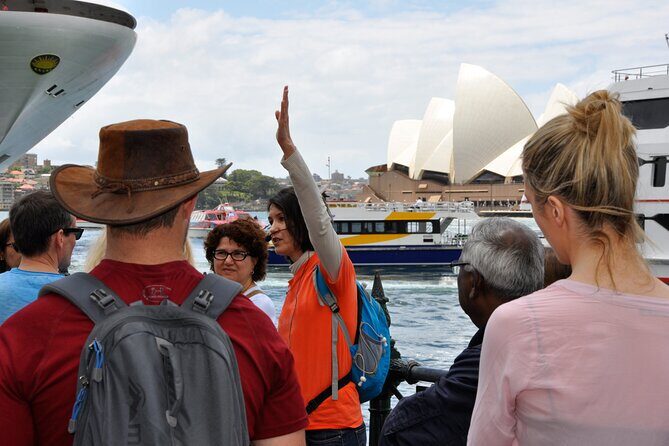
The tour ends at Campbells Cove, located on Circular Quay’s edge. This ending point is practical: you get easy access to public transport, nearby pubs, and the Opera House and Harbour Bridge view corridor.
Even if you’re not a big harbor person, the final view helps you lock in the whole route. You started inland with parks and institutions and now you’re back at the water that shaped trade, settlement, and the city’s early economy.
If you’re there on a weekend, the nearby Rocks market area is also mentioned as a nearby option, so you can keep the day going with a snack and some browsing.
Group Size, Pacing, and Physical Reality
The max group size is 16, and the tour is marked for travelers with moderate physical fitness. In plain terms: it’s walkable, but it’s not a sit-and-stretch tour.
Good news from the experience notes: one review mentions the walk felt easy and mostly downhill, and another highlights how the guide watched the heat and used shade when available.
Still, you should assume you’ll do a fair amount of walking across downtown streets and lanes. Wear shoes you’d trust for uneven pavement in old areas like The Rocks.
Also, the tour uses a mobile ticket, and service animals are allowed. It’s near public transportation, which helps if you want to start with confidence and not overthink getting back to your hotel.
Price and Value: $32.28 for 2.5 Hours of City Context
At $32.28 per person for about 2 hours 30 minutes, the value is tied to one thing: you’re paying for a guide to connect the dots across many sites.
Most of the listed stops are shown as free admission (or free to visit), which means you’re not paying separate entry fees just to experience the landmarks. You’re getting a guided route that explains what you’re seeing: convicts and immigration at Hyde Park Barracks, a rum-linked hospital story, legal precinct context, and a street-level convict-era neighborhood loop at The Rocks.
If you’re visiting Sydney for the first time, that kind of organized orientation is usually money well spent. You’ll learn where to return later, and you’ll understand what to look for when you pass those places on your own.
If you already know Sydney’s timeline cold, you might find the tour best as an efficient refresher and a walking map, not a replacement for deeper museum visits.
Who This Tour Is Best For
This works especially well if you:
- Want a first-day or early trip introduction to Sydney and The Rocks
- Like history that connects buildings, street patterns, and human stories
- Prefer small group tours where you can hear the guide and ask questions
- Want ideas for what to explore on your own afterward (including free options around the city)
It may be less ideal if you:
- Have limited mobility and can’t manage steady walking on city sidewalks and lanes
- Want only major attractions with minimal time in side streets (this tour includes many short street stops)
Should You Book This Sydney Walking Tour?
Yes, if you want a smart starter loop that pairs Hyde Park and central institutions with The Rocks street history, all in one small-group format.
Book it early in your Sydney trip if you can. The payoff is orientation: you’ll know how the city is arranged, which landmarks matter, and what parts of The Rocks feel most worth revisiting. Guides named in the experience notes—like Lily and Leilani—also show up as consistent strengths, with careful pacing and heat awareness.
If you’re on the fence, do this simple test: if you’d rather walk with someone who can explain why buildings matter, this tour fits. If you only want to tick off photos and move on, you might prefer doing the route on your own.
FAQ
How long is the Sydney Walking Tour including The Rocks (small group)?
The tour lasts about 2 hours 30 minutes.
Where does the tour start and where does it end?
It starts at the Archibald Memorial Fountain in Hyde Park North (110 Elizabeth St, Sydney NSW 2000) and ends at Campbells Cove (4 Circular Quay W, The Rocks NSW 2000).
How many people are in the group?
The tour is limited to a maximum of 16 travelers.
How much does it cost?
The price is $32.28 per person.
Is the tour walkable for someone with moderate fitness?
It’s listed for travelers with a moderate physical fitness level, and you should expect a solid amount of walking for about 2.5 hours.
What is the cancellation window?
You can cancel for a full refund up to 24 hours before the experience’s start time. If you cancel less than 24 hours before, the amount paid is not refunded.
You Might Also Enjoy




More Walking Tours in Sydney


More Tours in Sydney
- Blue Mountains Small-Group Tour from Sydney with Scenic World,Sydney Zoo & Ferry
★ 5.0 · 3,709 reviews

More Tour Reviews in Sydney
- Blue Mountains Small-Group Tour from Sydney with Scenic World,Sydney Zoo & Ferry
★ 5.0 · 3,709 reviews