REVIEW · SYDNEY
Sydney: Dee Why Beach Group Surfing Lesson
Book on GetYourGuide →Operated by Dee Why Salty Surf School · Bookable on GetYourGuide
Dee Why surf lessons turn nerves into wave time. This 90-minute group coaching at Dee Why Beach focuses on the real basics you need fast: paddling, positioning, popping up, wave selection, turning, and ocean safety, all in a friendly setup.
I like how you get small-group attention instead of feeling lost with a crowd. With coaches who bring 15+ years combined surf coaching experience, the instruction stays clear and practical, and you’re not just watching others surf.
The main thing to consider is fit. This lesson isn’t suitable for non-swimmers, and people with back problems should skip it, since you’ll be in the water and doing paddling and board work during the session.
In This Review
- Key things to know before you go
- Arriving at Dee Why Beach: where the lesson starts
- What to wear and bring (so you’re not stuck improvising)
- Who runs the coaching
- The group setup: why a lesson here feels social, not intimidating
- Skill 1: paddling and positioning (the part most people get wrong)
- Skill 2: the pop-up that actually works on the clock
- Skill 3: wave selection and timing (so you stop wasting paddles)
- Skill 4: turning and control (small changes, big payoff)
- Ocean safety and awareness: the part that keeps surfing fun
- Equipment and comfort: what’s provided, what’s on you
- Duration and pacing: 90 minutes that don’t drag
- Is this worth $53? Value check for a Dee Why lesson
- Where Dee Why fits in: a local-feeling surf lesson
- Who should book this lesson (and who should skip it)
- My decision guide: should you book?
- FAQ
- FAQ
- How long is the Dee Why Beach group surf lesson?
- What does the lesson cost?
- Where do I meet for the lesson?
- What equipment is provided?
- What should I bring to the lesson?
- Is transportation included?
- Are food and drinks included?
- Do they offer photography services?
- Who is the lesson suitable for?
- What are the cancellation rules?
Key things to know before you go
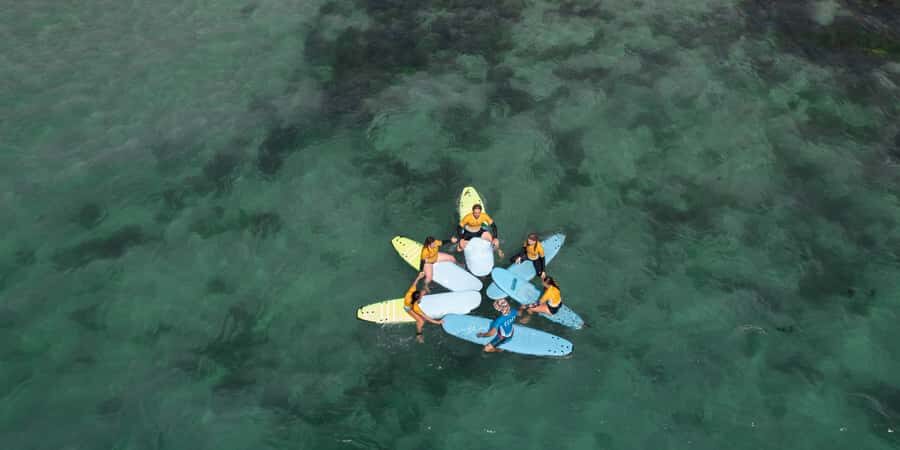
- Supportive group vibe that helps beginners build confidence in the lineup
- Pro coaching with hands-on tips on paddling, pop-ups, and wave choice
- Small group size so you actually get attention instead of one-size-fits-all advice
- Ocean safety taught alongside technique, not as an afterthought
- Equipment provided (surfboard and wetsuit), so you travel light
Arriving at Dee Why Beach: where the lesson starts
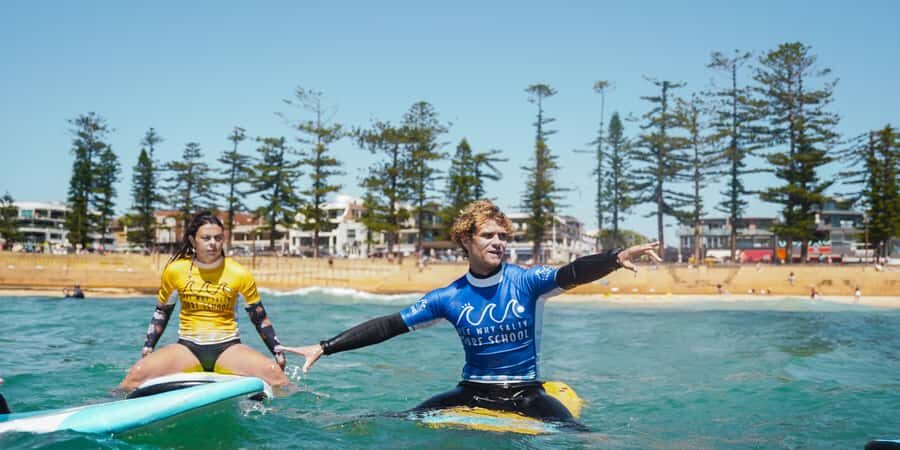
Your lesson meeting point is outside the DY Surf Life Saving Club. Look for the flags set up in front of the club. This matters more than you’d think: surf coaching is time-sensitive, and being at the right place keeps the group moving without dragging you through delays.
You’ll want to plan your timing so you arrive a little early, get oriented, and feel calm before the water portion begins. Dee Why is a working beach environment, not a remote surf camp. That’s good. It means the experience feels real, and you’ll get a taste of how surf culture actually works there.
Also, the lesson runs for 90 minutes, and you should treat that as your whole window to learn the fundamentals and try catching waves. Don’t schedule something tight right after, especially if you’re new to being out in the water.
You can also read our reviews of more tours and experiences in Sydney

What to wear and bring (so you’re not stuck improvising)
They provide all the surf gear, but you still need a few basics:
- Swimwear (wear it under your clothes when you arrive)
- Towel
- Sunscreen
A simple tip: if you’re prone to getting sunburned, bring sunscreen you trust and apply it before you head into the lesson. There’s a clear instruction to apply it beforehand, and it’s not the time to discover your sunscreen is out of date.
In general, wetsuit use helps with comfort and warmth, but you still get sun exposure when you’re on the sand and in the water. If you’re planning to explore Dee Why after, pack for that too. Your towel will matter.
Who runs the coaching
The school is Dee Why Salty Surf School. The coaches include Dan and Conrad, lifelong surfers with over 15 years of combined coaching experience. In the student feedback, you’ll also see names like Will, plus instructors Anguss and Gor. That tells me one thing: the team is hands-on and focused on helping you make progress, not just showing up and hoping for the best.
If you speak English, you’re covered. The sessions are taught in English.
The group setup: why a lesson here feels social, not intimidating
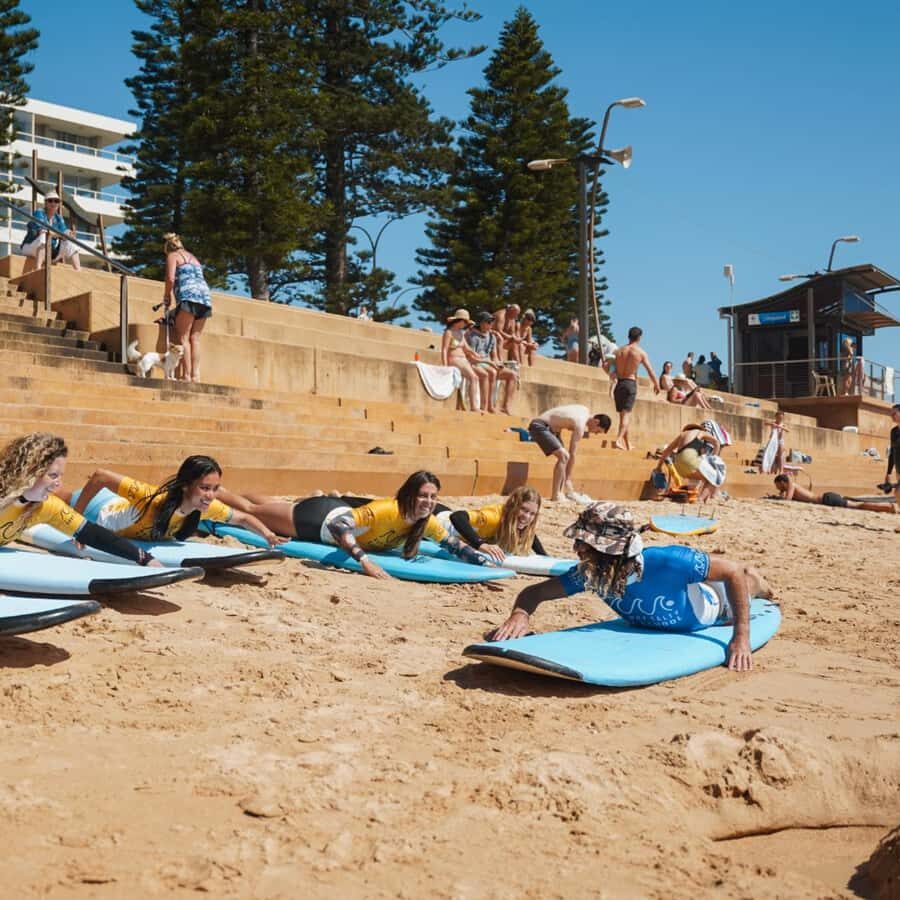
This is a group surf coaching session for adults. The vibe is designed to be fun and supportive, not tense or competitive. That social element is part of the value.
If you’re brand new, the biggest barrier is usually fear of looking clumsy. A group lesson lowers that pressure. Everyone is learning at their pace, and you can compare notes through the coach’s feedback without feeling singled out.
If you’ve surfed before but struggle with one specific skill, group coaching can still help because you’ll hear the same fundamentals explained in a way you can apply immediately. Surf coaching works best when it’s short, clear, and repeated with corrections. That’s exactly what a tight session is built for.
And because the group size is kept small, you’re more likely to get direct attention when something needs correcting. In surf lessons, that difference is huge. One wrong angle on your paddling or pop-up can cost you the attempt. Small groups help the coach notice those details sooner.
Skill 1: paddling and positioning (the part most people get wrong)
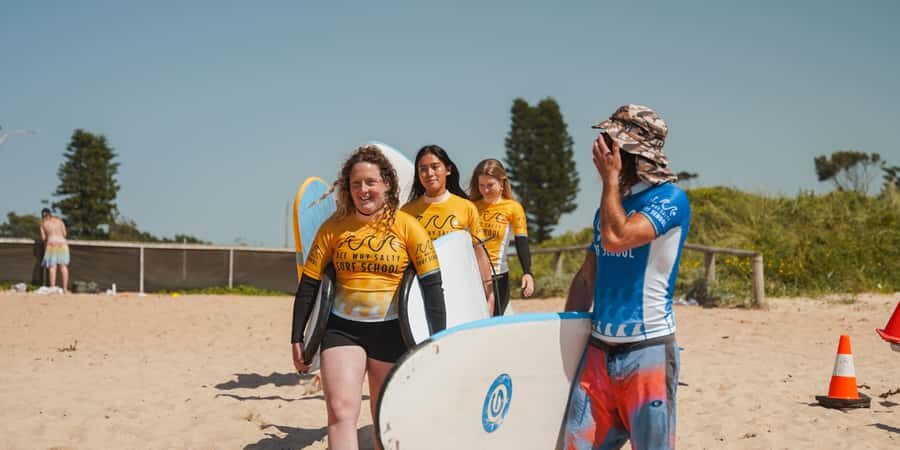
You’ll get tips on paddling, positioning, and the foundational movements that let you catch a wave. This is the stage where you go from trying to surf to actually surfing.
Here’s how to think about it:
- Paddling is about speed and direction. If you’re not moving efficiently, you’ll miss the wave, even if your pop-up is decent.
- Positioning is about where you sit and how you face the water. The best paddling in the world doesn’t matter if you’re drifting into the wrong spot.
A practical way to use the coaching: listen carefully to what the instructor says about your board angle and where you’re looking. Even a small cue can change how the board responds in the water.
In one of the course accounts, the instruction was credited with helping people stand up on their boards quickly. That’s often linked to better positioning and paddling timing, not just better courage.
- Blue Mountains Small-Group Tour from Sydney with Scenic World,Sydney Zoo & Ferry
★ 5.0 · 3,709 reviews






Skill 2: the pop-up that actually works on the clock
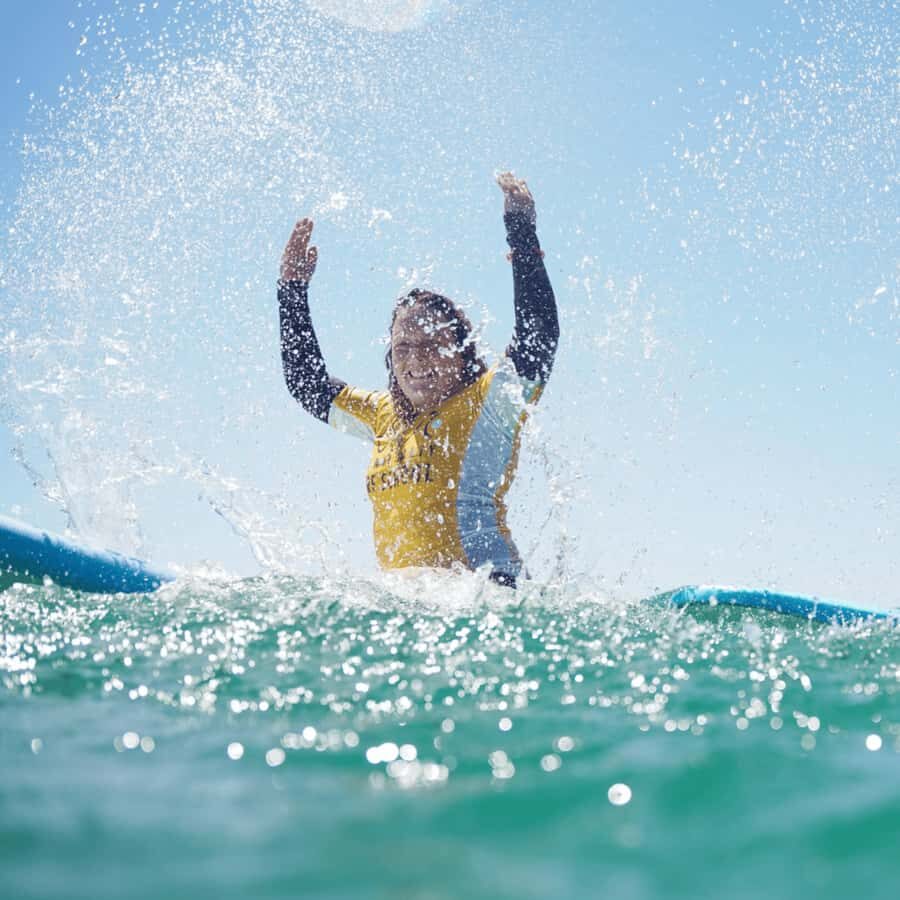
The session includes instruction on popping up—the move from lying on the board to standing. For beginners, the pop-up is usually the make-or-break moment. You can wait for the right wave, paddle hard, and still lose it because your feet land too late or too stiff.
The best pop-up coaching tends to focus on rhythm and weight distribution. You need your upper body to rise without yanking your lower body around, and you need your feet to land with balance instead of flailing.
The feedback you’ll see from the lesson matches that idea. For example, one participant specifically called out how their instructor helped them get up after only their second try. When a pop-up finally clicks, it’s the kind of progress you remember for a long time.
A tip for your own learning: don’t treat every attempt like a performance. Treat it like reps. You’re building muscle memory in a short window, and each wave is basically a quick lesson in what your body needs to do differently next time.
Skill 3: wave selection and timing (so you stop wasting paddles)
This lesson also covers wave selection and timing—two topics that separate “I tried surfing” from “I caught waves.”
Wave selection is more than choosing a wave. It’s reading the water enough to know:
- whether it’s too small or too steep for your current skill level,
- where the wave is traveling,
- and whether you’re likely to catch it before it disappears under your board.
Timing is the moment you decide to paddle hard and commit. If you paddle too early, you’ll stall and miss. Too late and the wave passes you like a bus without slowing down.
In the coaching structure you’re getting, you should expect tips on how to line these decisions up, plus guidance on what to watch for in the set and between sets. Even if you can’t read every detail yet, learning the framework helps you improve faster than guessing.
Skill 4: turning and control (small changes, big payoff)
You’ll also learn turning as part of the core instruction. Turning is where surfing starts to feel like more than standing up and hoping.
Even basic turns teach you:
- how to shift your weight,
- how to control your line across the face of a wave,
- and how to stay balanced while speed changes.
If you’re a beginner, turning lessons will probably be about getting comfortable with direction changes rather than carving perfect arcs. That’s fine. The goal is control, not perfection.
Ocean safety and awareness: the part that keeps surfing fun
A good surf lesson doesn’t just teach technique. It teaches you how not to get into trouble.
This session includes guidance on ocean awareness and safety alongside your surfing technique. That likely covers things like staying mindful in the water, understanding how waves move through the area, and being aware of where you’re at in relation to others.
It’s worth taking safety instruction seriously even if you feel confident. In surf conditions, your plan can change quickly, and you’ll be grateful you listened the first time.
Also note the rules: no smoking, no alcohol or drugs, and no pets. That’s not just paperwork. It keeps the group focused and the beach environment comfortable for everyone.
Equipment and comfort: what’s provided, what’s on you
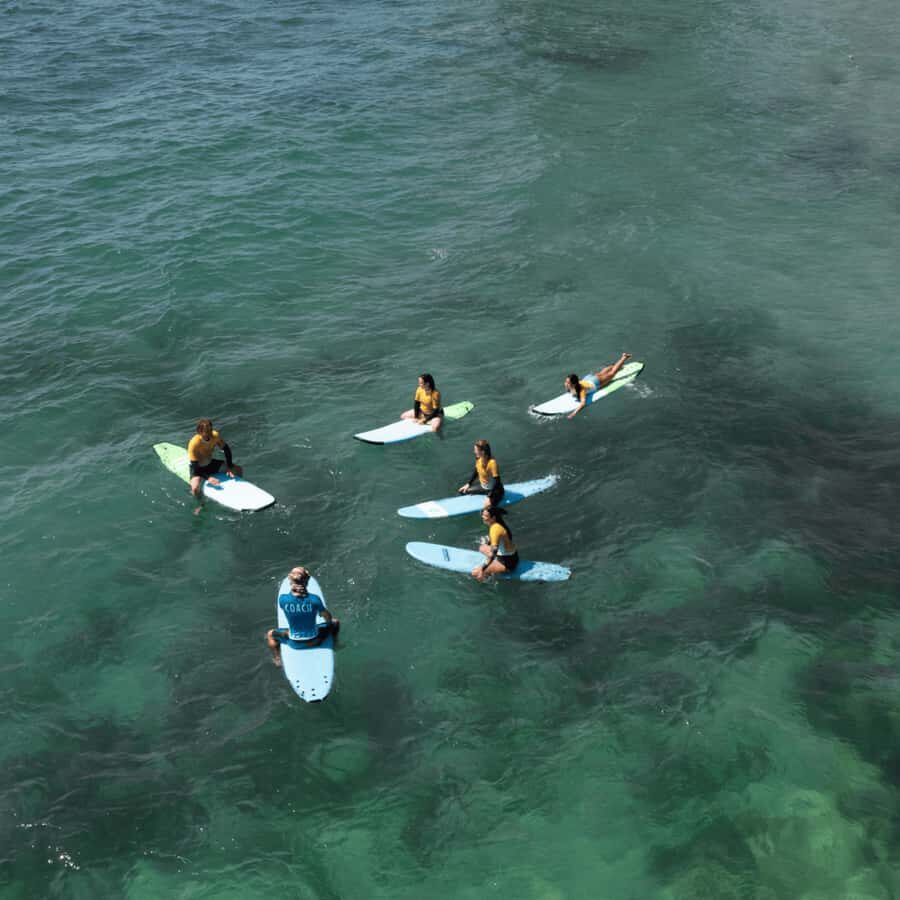
All necessary equipment is included, including surfboards and wetsuits. That’s a real value point. Buying or renting a board and wetsuit separately can add up fast, especially when you’re only doing one lesson.
You just need to show up ready physically and with the right basics (swimwear, towel, sunscreen). If you’ve never worn a wetsuit, be prepared for that tight, snug feel. It helps with warmth and flexibility, but it can feel strange until you get used to it.
If you’re sensitive to cold, a wetsuit helps you stay in the session longer without feeling like you’re rushing through. That comfort supports learning. You learn faster when you’re not focused on shivering.
Duration and pacing: 90 minutes that don’t drag
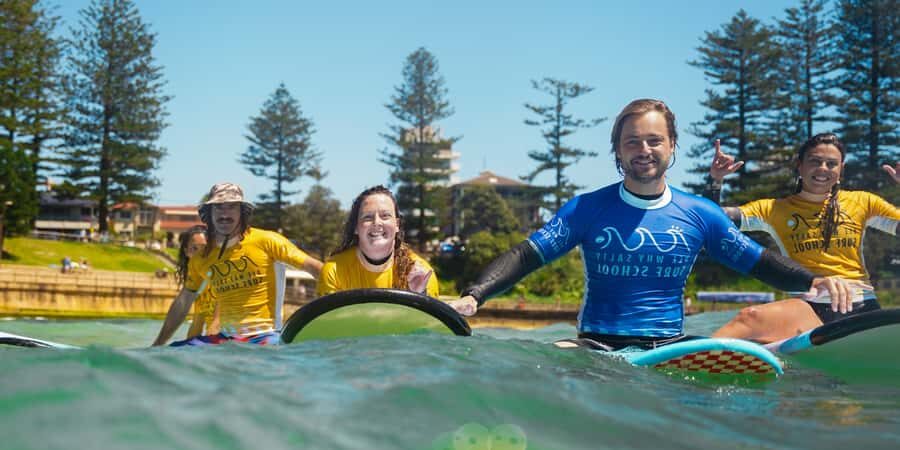
Ninety minutes is long enough to get instruction, try skills, and actually experience the payoff of standing on a board. It’s also short enough to avoid the lesson turning into a slow endurance session.
A practical expectation: you’ll likely spend some time in instruction and setup, then transition into repeated attempts. Progress tends to show up through repetition, not one lucky moment.
Because it’s a group lesson, you’ll also learn through watching others. You’ll see how different students handle paddling and pop-ups, and you’ll catch patterns in the coach’s corrections. That’s one of the quiet benefits of a group setting: you get extra “examples” even when you’re waiting.
Is this worth $53? Value check for a Dee Why lesson
$53 per person for a 90-minute group lesson sounds straightforward, but value depends on what you get with it.
Here’s what you’re actually buying:
- Professional instruction from surf coaches with serious experience
- All equipment (board and wetsuit)
- A small group setting designed for attention
- Coaching that covers multiple core skills: paddling, pop-up, turning, wave selection, and ocean safety
If you tried to build this yourself, the cost quickly multiplies: surfboard rental, wetsuit rental, and time spent without a coach correcting technique. Even if you only improve a little, you save a lot of trial-and-error time.
So for a first surf lesson, this price feels like sensible value—especially if you want the coaching structure rather than just renting gear and figuring it out. One participant even advised skipping Bondi and going to Dee Why, which matches the idea that a more local beach lesson can deliver real progress without the extra hype.
Where Dee Why fits in: a local-feeling surf lesson
Dee Why Beach has a strong local feel, and that matters when you’re trying something new. You’re not just chasing famous surf branding. You’re learning in a working beach environment with a surf life saving culture nearby.
That context supports the safety and awareness side of the lesson. You’ll likely leave with a better sense of how to respect the ocean conditions rather than just collecting a few wave rides.
And the beach itself is a great setting for a group lesson. It’s easy to find, easy to access, and simple to meet up at the club with the flags out front.
Who should book this lesson (and who should skip it)
This is a great fit if:
- you’re a beginner who wants clear coaching and structured learning,
- you’re at an intermediate level and want tips on wave selection and timing,
- you want a social experience with supportive people rather than a solo grind,
- you value hands-on corrections in the water.
You should skip it if:
- you’re a non-swimmer,
- you have back problems,
- you’re looking for a private lesson format (this one is explicitly group coaching),
- you have very young children. It’s not suitable for children under 7.
If you’re unsure about whether the physical part will work for you, think about paddling effort and being in the water for the session length. If you can’t comfortably handle that, choose another option.
My decision guide: should you book?
If you want your first surf experience to include real coaching moments—paddling corrections, pop-up feedback, wave choice guidance, and safety tips—this Dee Why group lesson is a solid bet. The combination of equipment included, small-group attention, and a coach-led skill focus is exactly what makes lessons worth your time.
I’d especially recommend it if you’re choosing between a major, famous surf stop and a more local option. Dee Why’s setup and the way this lesson teaches you the fundamentals make it feel like a practical path to standing up and catching waves, not just taking photos.
FAQ
FAQ
How long is the Dee Why Beach group surf lesson?
It lasts 90 minutes.
What does the lesson cost?
The price is $53 per person.
Where do I meet for the lesson?
Meet outside the DY Surf Life Saving Club. Look for the flags set up in front of the club.
What equipment is provided?
All necessary equipment is provided, including surfboards and wetsuits.
What should I bring to the lesson?
Bring swimwear, a towel, and sunscreen.
Is transportation included?
No. Transportation to the meeting spot is not included.
Are food and drinks included?
No. Food and drinks are not included.
Do they offer photography services?
No. Photography services are not included.
Who is the lesson suitable for?
It’s for adults surf coaching sessions and is not suitable for children under 7. It’s also not suitable for people with back problems or non-swimmers.
What are the cancellation rules?
You can cancel up to 24 hours in advance for a full refund.
You Might Also Enjoy

More Workshops & Classes in Sydney



More Tour Reviews in Sydney
- Blue Mountains Small-Group Tour from Sydney with Scenic World,Sydney Zoo & Ferry
★ 5.0 · 3,709 reviews