REVIEW · SYDNEY
Sydney Fish Market Behind the Scenes Tour
Book on GetYourGuide →Operated by Sydney Fish Market · Bookable on GetYourGuide
Seafood gets serious at dawn. This Sydney Fish Market behind-the-scenes tour lets you step onto the auction floor, watch real buying action, and learn how seafood moves from blue crates to dinner.
I like two things most: first, you get to see the Dutch auction system working live, with big volume and real decision-making. Second, you’ll scan over 100 seafood species—everything from everyday favorites to the weird and wonderful.
One drawback to plan around: it runs in the early morning rhythm, so you’ll want comfortable socks and shoes and you should be ready to stand and move on the auction floor.
In This Review
- Key things I’d circle in your notes
- First time there: finding the guide and beating the clock
- The first look on the auction floor (and why safety gear is part of the point)
- Dutch auction system: watching seafood get sold at speed
- Blue crates and the 100+ species reality check
- Live demonstrations: tuna filleting, lobsters, sushi prep, oyster shucking
- What 2 hours feels like in real life
- Price and value: why $56 can make sense here
- Who should book this tour (and who might skip it)
- Should you book the Sydney Fish Market behind-the-scenes tour?
- FAQ
- What is the duration of the Sydney Fish Market behind-the-scenes tour?
- How much does the tour cost?
- What’s included in the tour?
- Do I need to buy food or drinks during the tour?
- Where do I meet the guide?
- What time do I need to check in?
- Is the tour suitable for kids or wheelchair users?
Key things I’d circle in your notes
- The auction floor access you normally don’t get as a public visitor
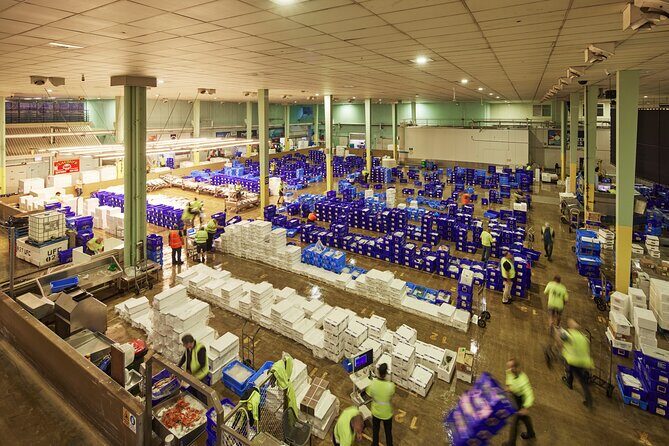
- Dutch auction in action, with seafood moving fast to 150+ buyers
- Blue crate “species spotting”, over 100 kinds of seafood up close
- Live prep demonstrations, including tuna filleting and oyster shucking
- A small group setup (limited to 10) that makes questions easier
- Proper safety gear provided, including safety footwear for the auction floor
First time there: finding the guide and beating the clock
This tour is short—2 hours—but it’s built around one key reality: the auction day is active early. You’ll meet at the LG Information Hub at 1 Bridge Road, Glebe, which is on the ground level on the side closest to the city. From there, you’ll get yourself to the tour start area inside the market complex. The usual pattern is that your guide takes you into the SFM foyer on Level 1, where you’ll wait on the black couches before the group heads toward the auction action.
The timing matters. You’re asked to arrive by 5:50am for check-in, so I treat this like a proper morning mission. That also means you should plan your day around it—no late starts, no rushing at the last minute. If you’re coming from central Sydney, give yourself a little buffer so you’re not arriving out of breath.
What to wear is not optional detail here. You’ll be in safety footwear, but they still require you to bring or wear socks for comfort. You also want comfortable shoes, and you’ll need a jacket. Hats are not allowed, and you can’t wear open-toed shoes. The market floor is also not set up for strollers—no prams or wheelchairs on the auction floor.
You can also read our reviews of more shopping tours in Sydney

The first look on the auction floor (and why safety gear is part of the point)
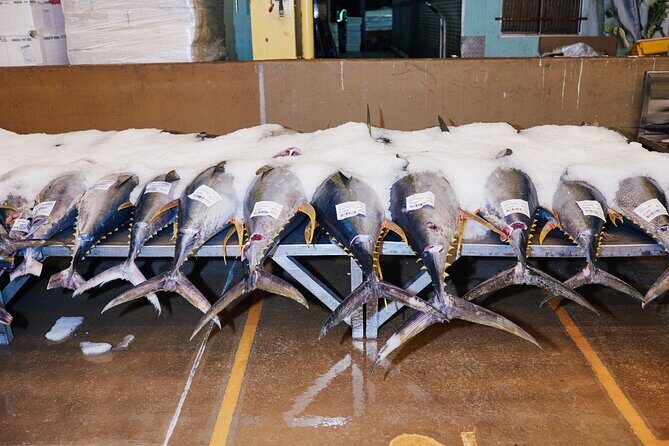
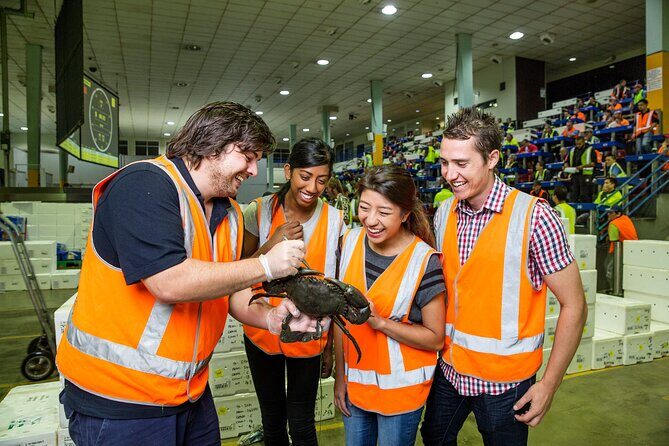
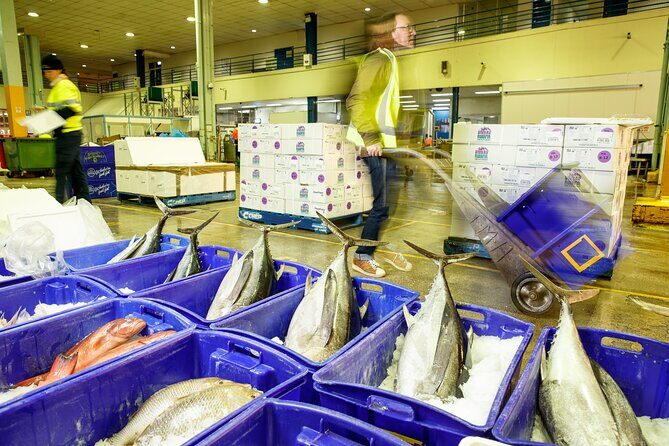
Once you’re suited up, the auction floor feels like a separate world—loud in energy, fast in motion, and very practical. The tour includes safety footwear for the auction floor, and in at least some cases your guide and the team provide a high-visibility layer as well (hi-vis jackets showed up in guides’ prep routines). I love this because it tells you the market isn’t staging a “tour performance.” They’re letting you experience real operations while protecting you.
This is where the tour earns its value. Most seafood experiences are based on what’s already been cleaned, packaged, or plated. Here, you see the steps before that. You’ll watch the hustle of the auction space—something that’s normally closed to the public—while your guide explains what’s happening and what buyers look for.
One more practical note: you’ll be standing and walking. That’s why you’ll want socks you trust and shoes you won’t regret. Also, keep food and drink expectations realistic: the tour doesn’t include meals, so plan to grab breakfast right after.
Dutch auction system: watching seafood get sold at speed
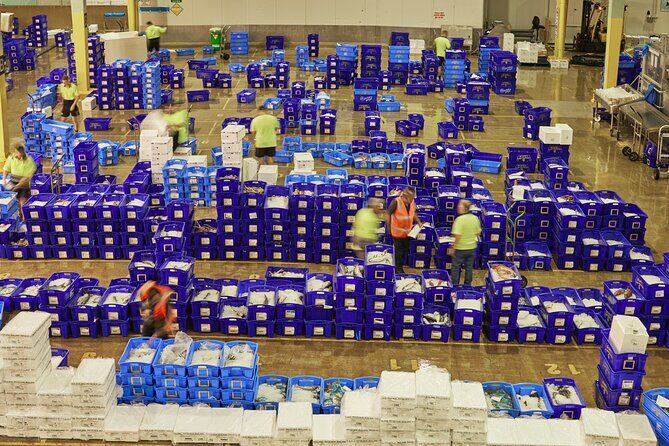
The heart of the tour is the Dutch auction system. You don’t just hear about it in theory—you watch it in action as seafood is sold to large groups of buyers (the tour notes 150+ buyers and sales of more than 50 tonnes).
What I like about this part is how concrete it is. Instead of guessing how pricing works, you see it happening as the auction proceeds and multiple buyers respond. Your guide is there to make sense of what you’re seeing: how the auction floor works, how items move through the system, and the basics of the quality control process that sits behind what ends up on the public side of things.
If you’re a fish and food geek, this is the moment you’ll want to pay attention with your full brain. One guide you might meet is Mark, and he’s described as both a tour guide and an experienced fisherman. People love when the explanation isn’t generic—and you’ll often get details like quality checks and how decisions are made right in the auction flow.
Blue crates and the 100+ species reality check
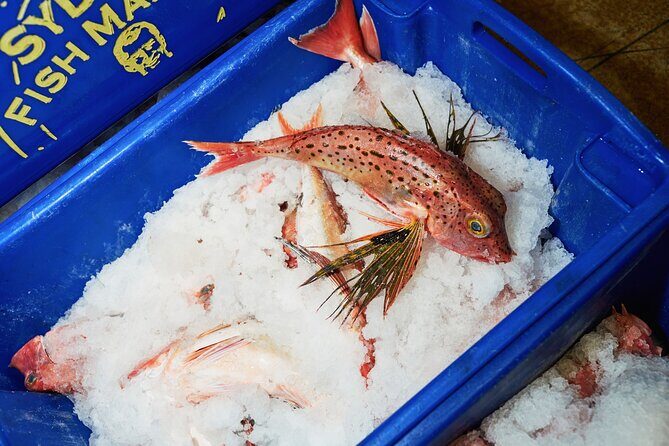
After you understand the selling engine, the tour shifts into your hands-on seafood education: over 100 seafood species shown in the famous blue crates. This is where your eyes get trained. You’ll see common items people order all the time, but you’ll also get introduced to the ones that most of us never spot at a supermarket or a normal fish counter.
I find this part genuinely useful because it changes what you ask for later. After a tour like this, you’ll start recognizing different types, textures, and names that usually vanish into menu descriptions. You’ll also hear explanations that help you connect species to how they’re handled in the market.
And yes, you’ll likely see the “weird and wonderful” end of the ocean. That’s not just entertainment. Seeing variety up close helps you understand how broad Australian seafood is, and it puts into context why a professional market needs order, speed, and the right safety standards.
Live demonstrations: tuna filleting, lobsters, sushi prep, oyster shucking
The best tours don’t just show you the fish—they show you how it gets turned into food. This one includes live demonstrations of seafood preparation, and the highlights listed are exactly the kind of stations you can’t fake at home.
Expect to see:
- Tuna filleting
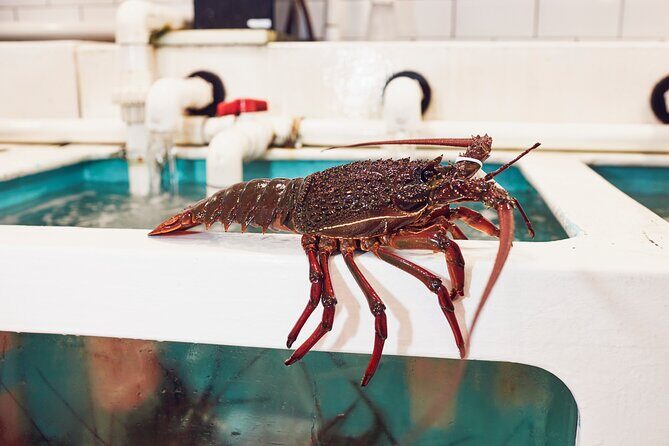
- Live lobsters
- Sushi prep
- Oyster shucking
- And other hands-on prep work as the tour progresses
I like demonstrations like these because they connect the auction floor to your plate. You watch the raw, operational side of seafood first, then you see how people transform it into something cooks and diners actually use. It also helps you understand why certain items are more delicate to handle than others, and why timing is everything in a market environment.
From the tour experience feedback, guides often bring a strong factual tone to these demos—Mike, for example, is noted for having lots of interesting facts and being very informative. When the guide can explain not only what they’re doing but why that technique matters, the demos click.
- Blue Mountains Small-Group Tour from Sydney with Scenic World,Sydney Zoo & Ferry
★ 5.0 · 3,709 reviews

What 2 hours feels like in real life
Two hours sounds short, but it’s the right length for an experience centered on a working marketplace. You’ll be moving through the market environment, listening to a guide’s explanation, and watching the auction and demo stations without the fatigue of a long, drawn-out tour.
The pace also suits a small group. The group size is limited to 10 participants, which matters more than you’d think. In a place as active as this, you want enough space to see the action and ask questions without waiting for a guide to repeat themselves.
One more detail you should plan around: this isn’t a sit-down museum visit. It’s practical, active, and hands-on. If you know you’re sensitive to standing for extended time, consider that upfront.
Price and value: why $56 can make sense here
At $56 per person for a 2-hour guided experience, the value comes from three things that are hard to replicate:
- Access: You’re stepping into the auction floor area that’s normally closed to the public. That access is the core product.
- Live learning: You watch the Dutch auction system at work and see how seafood is handled before it reaches customers.
- Prep demonstrations: Tuna filleting, lobster handling, sushi prep, oyster shucking—these are not passive visuals. They’re skill-based processes shown live.
The tour doesn’t include food or drinks, and you’re on your own for getting to and from the market. But the package does include guided access, safety footwear, and live demonstrations. For me, that’s what makes the price feel reasonable: you’re paying for an inside perspective you wouldn’t get by walking in and looking around.
Who should book this tour (and who might skip it)
This is a great fit if you:
- Love seafood and want to understand it beyond menus
- Want to see how a real fish market runs, not just a curated attraction
- Enjoy education that’s tied to what’s happening right in front of you
- Prefer small groups where you can actually hear the guide
It’s less suitable if you:
- Need a wheelchair or stroller for the auction floor areas (the tour notes no wheelchairs or prams on the auction floor)
- Have young kids: it’s not suitable for children under 10
- Prefer fully seated experiences, because you’ll be on your feet in the market environment
Also, keep the rules in mind. No hats, no open-toed shoes, no smoking, and no littering. You don’t want your tour cut short because you missed one of the simple restrictions.
Should you book the Sydney Fish Market behind-the-scenes tour?
If your idea of a good trip includes real systems, real food work, and you enjoy learning while watching the action, I’d book it. The combination of auction floor access, a live Dutch auction lesson, and hands-on seafood prep demos makes this more than a sightseeing stop. It’s the kind of tour that gives you new context for meals you’ll eat later in Sydney.
I’d especially recommend it to food geeks and anyone who wants to understand what happens before seafood hits your plate. Just make sure you’re ready for the early start, dress for safety and comfort, and bring socks. If that’s your kind of morning, this tour is well worth the $56.
FAQ
What is the duration of the Sydney Fish Market behind-the-scenes tour?
The tour lasts 2 hours.
How much does the tour cost?
It costs $56 per person.
What’s included in the tour?
You get a guided tour, safety footwear for the auction floor, and live demonstrations of seafood preparation.
Do I need to buy food or drinks during the tour?
Food and drinks are not included, so you’ll need to plan for that on your own.
Where do I meet the guide?
The meeting point is the LG Information Hub at Sydney Fish Market, 1 Bridge Road, Glebe.
What time do I need to check in?
You should arrive by 5:50am for check-in.
Is the tour suitable for kids or wheelchair users?
It is not suitable for children under 10. Wheelchair users are also not suitable for this tour, and wheelchairs or prams are not allowed on the auction floor.
You Might Also Enjoy
More Shopping Tours in Sydney
More Tours in Sydney
- Blue Mountains Small-Group Tour from Sydney with Scenic World,Sydney Zoo & Ferry
★ 5.0 · 3,709 reviews
More Tour Reviews in Sydney
- Blue Mountains Small-Group Tour from Sydney with Scenic World,Sydney Zoo & Ferry
★ 5.0 · 3,709 reviews