REVIEW · SYDNEY
Historical True Crime Walking Tour of East Sydney
Book on Viator →Operated by Murders Most Foul · Bookable on Viator
East Sydney has a dark side. This walking tour strings together true-crime stories across decades, from a 1920s cold case to notorious 1960s murders, all while you’re also seeing Darlinghurst’s Victorian and Edwardian streets. The star here is the guide, Elliot, who keeps the mood interesting without turning it into a lecture.
I especially like that you get two payoff types at once: real places tied to crime—and the architecture and street layout that make those stories feel grounded. Still, keep in mind it’s a true-crime format, so it may not be for you if you want a light, purely sightseeing walk.
In This Review
- Key highlights you’ll actually care about
- East Sydney’s true-crime stories meet real streets
- Hyde Park: ANZAC Memorial views and a 1920s cold case
- Darlinghurst laneways: Victorian and Edwardian streets with gangland echoes
- The gaol and courthouse: where justice met the prison system
- Kinselas Hotel ending: a 1930s funeral parlour turned bar
- Price and pacing: why $24 feels fair
- Weather, timing, and what to wear
- Who should book this East Sydney walking tour
- Should you book it?
- FAQ
- FAQ
- Where does the tour start?
- What time does the tour begin?
- Where does the tour end?
- How long is the walk?
- How much does it cost?
- What kind of ticket do you receive?
- How large is the group?
- What should I expect in terms of walking and fitness?
- Is the tour near public transportation?
- Is the tour suitable if it rains?
- Can service animals join?
Key highlights you’ll actually care about
- Hyde Park starting points like the ANZAC Memorial and pond, plus a 1920s cold case murder story
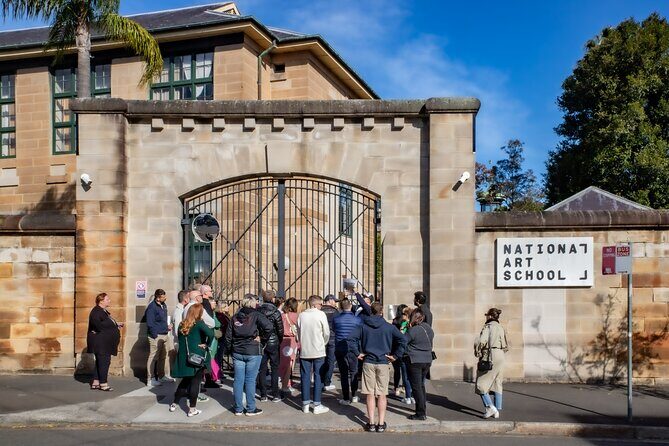
- Darlinghurst laneways where you trace historical crime scenes from the 1860s to the 1970s
- Convict-era sites including the old Darlinghurst gaol built by convicts in 1841
- Crime names tied to the streets including the Parkland Killer and the Mutilator Murders of the 1960s
- A dramatic finish at Kinselas Hotel, a converted 1930s funeral parlour on Taylor Square
East Sydney’s true-crime stories meet real streets
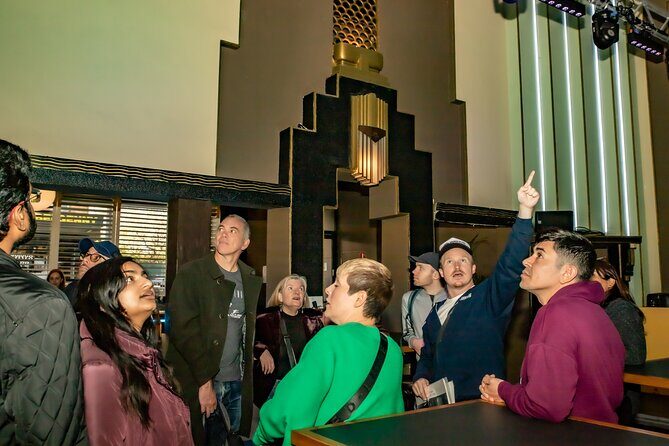
This tour works because it refuses to treat crime like a TV plot. You’re walking through East Sydney where buildings, laneways, and old institutional sites still shape what could happen and where people might hide. Even if some details are grim, the guide’s job is to show how the area’s changes over time line up with the stories being told.
You also get variety without a long grind. It’s about two hours, with a route that stays manageable, so you can handle it even if you’re not a long-distance walker. And because it’s a group tour with a small cap (up to 25 people), you’re more likely to get an engaging, conversational feel rather than a distant narration.
Price helps too. At $24, this is a lot of “guided time” for not much money—especially because it isn’t only about one event. You’re covering the arc from early colonial days through the mid-20th century, then finishing in a place that has its own famous modern role.
You can also read our reviews of more walking tours in Sydney
Hyde Park: ANZAC Memorial views and a 1920s cold case
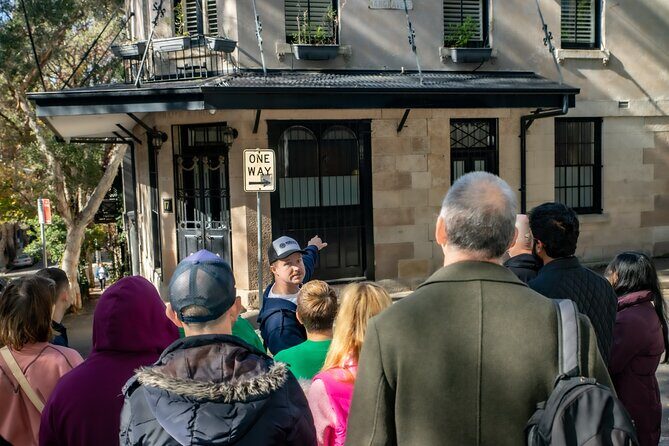
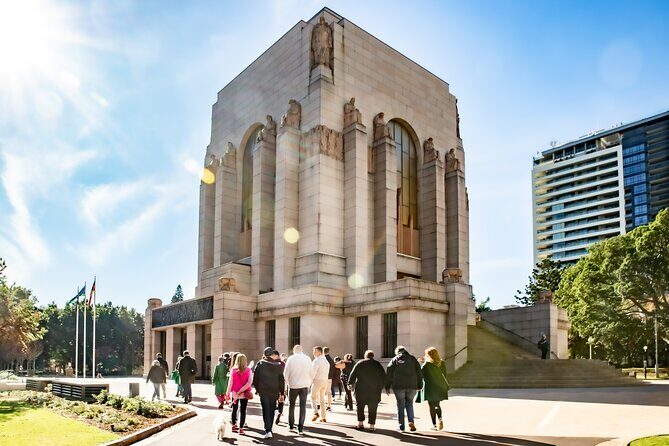
You start in Hyde Park near Museum Sydney at 11:00 am, then the tour uses Hyde Park as a way to set the scene. You’ll see the ANZAC Memorial and pond, and you’ll hear how this park fits into wider Sydney identity. That matters, because it frames the day as more than just street-level mayhem.
From there, the stories get specific. You’ll hear about a cold case murder from the 1920s, shared in a way that connects the incident to the setting around you. You’ll also get a historical layer that goes back earlier than the crime narratives: Hyde Park was used by Aboriginal people before colonization, and it’s also tied to a sports milestone, including the first cricket match between Australians and English in 1830.
What I like about this opening is the contrast. Starting with memorials and deep-time context prevents the tour from feeling like it’s only chasing sensational headlines. It’s a good way to get your bearings fast before you head into Darlinghurst’s older streets and darker legends.
Darlinghurst laneways: Victorian and Edwardian streets with gangland echoes
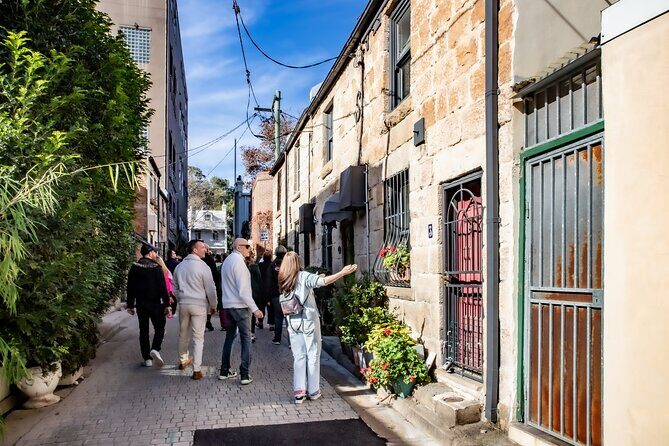
After Hyde Park, the walk shifts into the old suburb of Darlinghurst—often thought of as part of East Sydney. This is where you start noticing why the tour route feels like storytelling. The street grid, side lanes, and building styles give you a visual sense of how neighborhoods can concentrate people, opportunity, fear, and secrecy.
This is also the segment that leans hardest into the true-crime vibe. You’ll hear about criminals, prostitutes, and drug dealers, with the guide tying those themes to the way the area functioned from the 1860s into the 1970s. Darlinghurst is described as a particularly dangerous suburb between 1890 and 1960, full of slums and ganglands—and you’ll walk through the part of the city where that reputation didn’t come from nowhere.
Two terms you’ll hear that make the stories feel place-specific are Parkland Killer and the Mutilator Murders from the 1960s. You’ll also hear about an area once known as Razorhurst, connected to old gang fights. The real value here isn’t memorizing case names. It’s watching how the guide maps events onto the physical city—turning what could be abstract crime talk into something you can follow block by block.
A small consideration: because the stories cover multiple decades and types of crime, you’ll want to stay mentally present. If you tune out for a few minutes, you might miss the link the guide is making between a location and the case thread.
The gaol and courthouse: where justice met the prison system
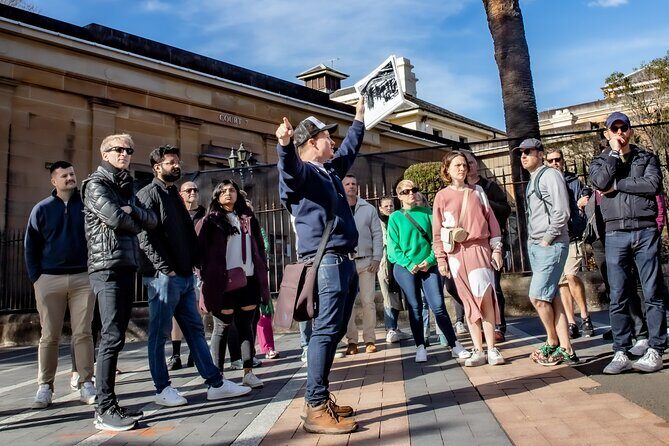
Darlinghurst is where the tour adds its strongest “institutional” stops. You’ll see the old Sydney Darlinghurst gaol, built by convicts in 1841. That date isn’t just trivia. When you stand near sites built for punishment, the stories about inmates and hangmen stop being abstract. The guide connects the prison system to the broader world that produced it.
Next comes the old police station and courthouse. Those places matter because they show how crime wasn’t treated as an isolated event—it was handled through systems: investigation, detention, prosecution, punishment. Even if you don’t usually care about legal history, seeing the physical footprint helps you understand why certain crimes might draw particular enforcement attention in different eras.
What’s practical about these stops: they give structure to the tour. Instead of only moving from one rumor to another, the guide can anchor the narrative in the roles played by institutions. It’s also a great reminder that the city you’re walking through has been running on these systems for a very long time.
Kinselas Hotel ending: a 1930s funeral parlour turned bar
The walk ends at Kinselas Hotel on Taylor Square, at the address 383 Bourke St, Darlinghurst NSW 2010. This last stop adds a useful mood shift. Kinselas started as a 1930s funeral parlour, and it has since become a bar—yet the location still carries that dramatic energy you’d expect from a building tied to grief and last rites.
There’s also a modern cultural link that helps the ending land well. Kinselas is described as a famous backdrop for Sydney’s LGBT Mardi Gras. So you get something rare for a true-crime tour: not just a last story, but a reminder that the same streets can host joy and celebration too.
This matters because it stops the day from feeling like a one-way walk into darkness. You’re not leaving Sydney only with gloom. You’re leaving with context: the neighborhood has survived, changed, and still plays a role in contemporary life.
If you want to keep going after the tour, this ending point is a solid one. Taylor Square makes it easy to find something nearby, and the bar setting gives you a chance to swap notes with your small group while the stories are still fresh.
You can also read our reviews of more historical tours in Sydney




Price and pacing: why $24 feels fair
At $24 for around 2 hours, you’re paying for guided storytelling plus a route through multiple major East Sydney points. This price feels especially reasonable because the tour includes more than one “type” of stop: park history, convict-era sites, courthouse/police history, and a modern cultural endpoint.
The pacing is also worth mentioning. You’ll do a walking tour, but the route is not described as extreme, and it’s designed so you don’t spend the whole time burning energy just to reach one spot. That’s ideal for people who like walking tours but don’t want sore feet to be the main memory.
Group size helps too. With a maximum of 25 people, you’re more likely to hear the guide clearly at each stop and stay engaged. In a bigger group, the guide’s flow can get swallowed by noise and spacing. Here, the format supports a more personal feel.
Weather, timing, and what to wear
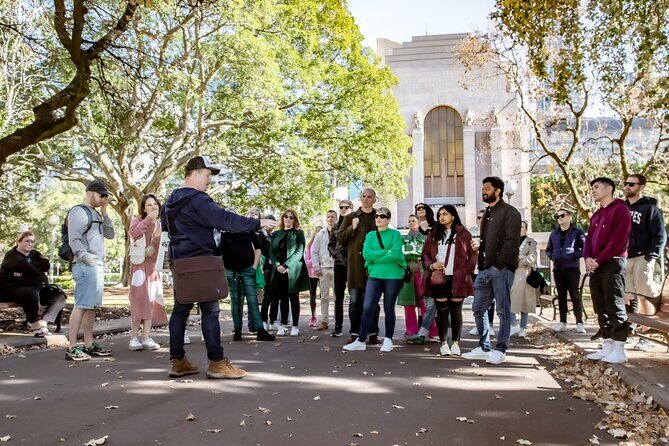
This tour requires good weather, so plan for a day when rain won’t be an issue. If the weather is poor, you’ll be offered a different date or a full refund, which is a nice safety net.
Timing is also a factor. Starting at 11:00 am means you’ll be in daylight for most of the walk, which makes it easier to enjoy the architecture and street details while you listen. For clothing, wear shoes you trust on city sidewalks and laneways. Even when the distance is manageable, you’ll still be walking on uneven surfaces and curbs.
Also, bring a mindset for the content. The tour includes crimes involving criminals, prostitutes, and drug dealers, plus well-known murder cases. You can still enjoy it without seeking out graphic details, but it helps to know what kind of atmosphere you’re buying.
Who should book this East Sydney walking tour
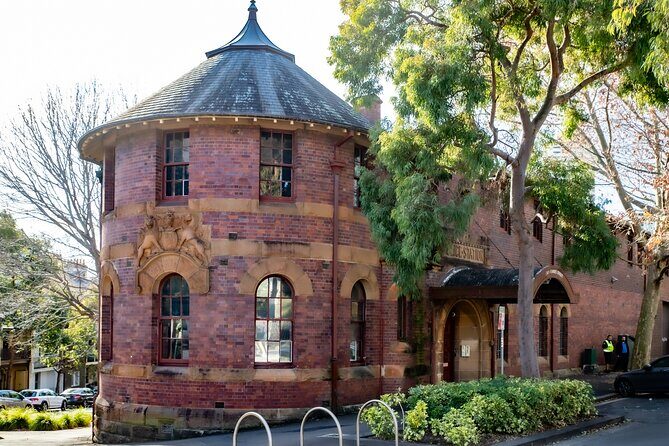
Book this if you like crime stories that connect to place, not just headlines. You’ll get the most out of it if you enjoy architecture and urban history alongside the darker narratives. It also suits people who like group learning with a guide who talks often and in an engaging way.
This tour is a good match for first-time visitors who want one focused neighborhood experience. East Sydney can be easy to skim past, but walking it with a structured narrative makes it feel like a real district with a timeline, not a random set of streets.
If you’re sensitive to true-crime themes, you might prefer a lighter history tour instead. And if you want quiet, scenic walking only, this one is not that. The route is part of the story, so you should expect to listen more than you photograph.
Should you book it?
I’d recommend booking if you want an efficient, value-packed way to see East Sydney’s street level and understand why it earned its reputation over time. Starting at Hyde Park, then moving through Darlinghurst’s older institutions and ending at Kinselas gives you a full neighborhood arc in about two hours.
Choose something else if you want a purely upbeat sightseeing day or if true-crime subjects will stress you out. But if you can handle a dark theme while staying curious about how history and institutions shaped the city, this is a strong bet—especially at $24.
FAQ
FAQ
Where does the tour start?
It starts at Museum Sydney, located at MuseumSydney NSW 2000, Australia.
What time does the tour begin?
The tour starts at 11:00 am.
Where does the tour end?
The tour ends at Kinselas Hotel on Taylor Square, at 383 Bourke St, Darlinghurst NSW 2010.
How long is the walk?
It lasts about 2 hours.
How much does it cost?
The price is $24.
What kind of ticket do you receive?
You’ll have a mobile ticket.
How large is the group?
The tour has a maximum of 25 travelers.
What should I expect in terms of walking and fitness?
You should have a moderate physical fitness level. The walking is part of a typical city stroll pace, not described as extremely long.
Is the tour near public transportation?
Yes, it’s near public transportation.
Is the tour suitable if it rains?
It requires good weather. If it’s canceled due to poor weather, you’ll be offered a different date or a full refund.
Can service animals join?
Yes, service animals are allowed.
You Might Also Enjoy

More Walking Tours in Sydney

More Tours in Sydney
- Blue Mountains Small-Group Tour from Sydney with Scenic World,Sydney Zoo & Ferry
★ 5.0 · 3,709 reviews

More Tour Reviews in Sydney
- Blue Mountains Small-Group Tour from Sydney with Scenic World,Sydney Zoo & Ferry
★ 5.0 · 3,709 reviews