REVIEW · SYDNEY
Photography Essentials Workshop in Sydney Harbour Foreshore
Book on Viator →Operated by Sydney Photographic Workshops · Bookable on Viator
Sydney Harbour teaches photography fast. This 4-hour Photography Essentials Workshop takes you along the foreshore to practice real shots while a Sydney-based photojournalist explains what makes an image work. I like that it starts at the camera basics (modes, lenses, what to set and why), then moves into manual mode so you get real creative control. I also like the practical flow: you learn techniques, then you apply them on the street around iconic spots like the Opera House and Bridge. One key consideration: it’s not suited to compact cameras that don’t offer full manual control.
You’ll meet at Customs House (31 Alfred St, Sydney NSW 2000) and finish back at the same point. The group stays small (max 10), and the training is designed for SLR and mirrorless cameras, plus any full-manual digital setup.
In This Review
- Key highlights you should care about
- Why Sydney Harbour foreshore is perfect for learning
- The camera training: modes, lenses, and real control
- Getting there and how the half day feels in practice
- Stop 1: Sydney Opera House and learning to compose on the move
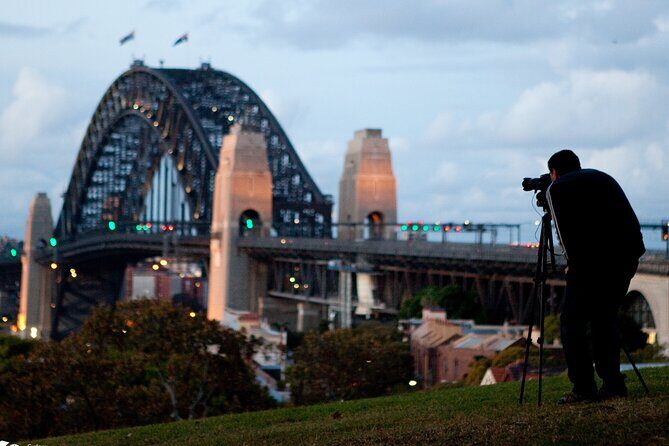
- Stop 2: Sydney Harbour Bridge and using lines and scale
- Stop 3: Circular Quay—spotting light and reflection opportunities
- Stop 4: The Rocks precinct for texture, atmosphere, and story
- Teaching style that actually helps you shoot better
- Gear checklist: what to bring (and what to skip)
- Price and value: is $107.59 worth it?
- Who should book this workshop?
- Should you book Photography Essentials in Sydney Harbour Foreshore?
- FAQ
- How long is the Photography Essentials Workshop?
- Where does the workshop start?
- What time does it start?
- What is the price per person?
- What cameras is this workshop suitable for?
- What route and stops are included?
- Is the group large?
- What if the weather is poor?
- Are service animals allowed?
Key highlights you should care about
- Small group size (max 10) for more personal guidance during the walk
- Manual-mode focus after getting the basics of shooting modes and gear
- Composition and lighting practice in a place where conditions change fast
- Stop-by-stop shooting around the Opera House, Harbour Bridge, Circular Quay, and The Rocks
- Pre-visualise your photograph before you take the shot
- Clear teaching style called out in past experiences, including instruction from Daniel Linnet
Why Sydney Harbour foreshore is perfect for learning
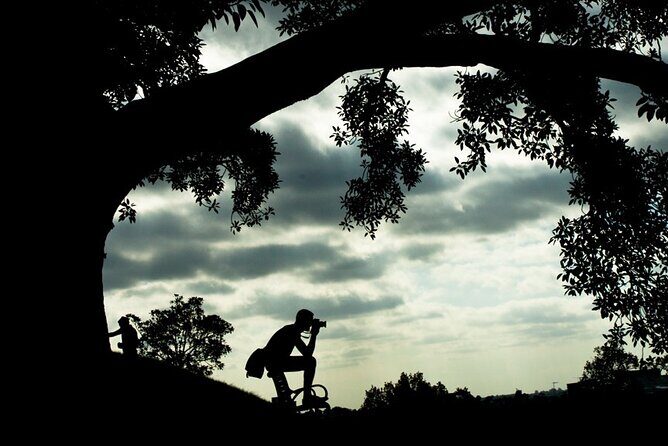
If you’ve ever felt stuck in Auto mode, Sydney Harbour is a very forgiving (and very photogenic) classroom. You’re dealing with big shapes, strong lines, lots of surface detail, and lighting that can shift quickly with cloud cover, water reflections, and the sun’s angle. That mix is exactly where photography skills start to click, because you’re not just learning theory—you’re seeing immediate cause and effect.
This workshop is built around teaching you the essentials you can apply anywhere: how to read a scene, how to plan your frame, and how to control exposure so the image matches what you see. And because you’re moving through several landmark areas along the waterfront, you get repeated practice rather than one single “pretty view” moment.
You can also read our reviews of more photography tours in Sydney

The camera training: modes, lenses, and real control
The heart of the class is a step-by-step approach to your camera and how it behaves. You’ll start with the fundamentals: what your camera is actually doing, how shooting modes relate to different photographic goals, and how lenses and basic kit fit into the process. Then it ramps up to manual operation, where the goal is simple: once you understand the settings, you can choose them on purpose.
Here’s what that means for you in plain terms:
- You learn what to use when (for example, when your camera might choose faster settings vs when you want full control).
- You build confidence in manual mode so your results are consistent, not random.
- You learn how to “think ahead” using the idea of pre-visualisation—choosing what the final photo should look like before pressing the shutter.
That last part is underrated. Most beginners don’t fail because they lack gear. They fail because they react too late. This workshop pushes you to set up your shot so the camera isn’t running the show.
Also, the workshop is designed for any camera with full manual capability. That includes SLRs and mirrorless cameras. If you’re using a compact camera without full manual control, you’ll likely miss the main point of the instruction.
Getting there and how the half day feels in practice
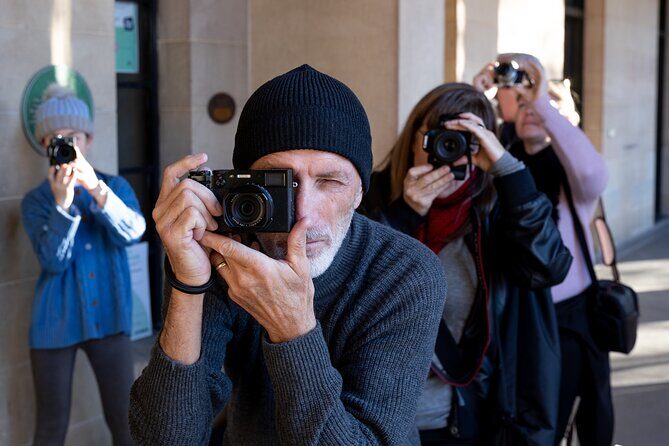
You start at Customs House at 12:00 pm, and the activity ends back where you meet. That matters more than you might think. When your start and end are simple, you spend less energy managing logistics and more energy learning to see.
The group size limit (max 10) also changes the vibe. You’re not just standing in a crowd while someone lectures. You can ask questions, you can test settings, and you can get feedback while you’re still at the location where the photo was taken.
A word on physical pace: there’s no heavy hiking described, but the experience notes a moderate physical fitness level requirement. This is a city walk in real conditions—comfortable shoes help, especially because you’ll likely be stopping, reframing, and shooting more than once per spot.
Stop 1: Sydney Opera House and learning to compose on the move
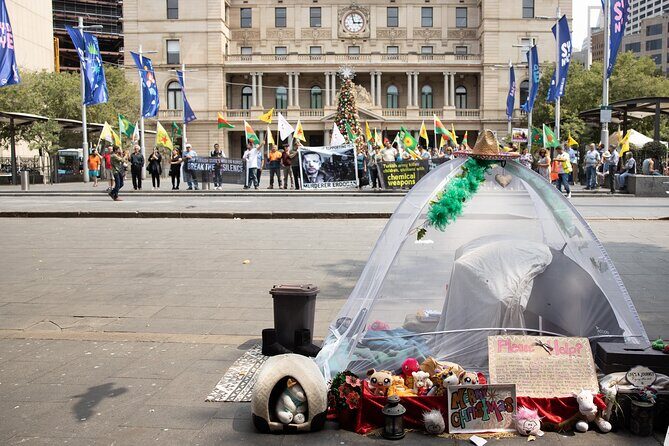
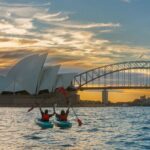
You’ll begin at the Sydney Opera House, which is a classic photography subject for a reason: it has bold geometry, multiple viewing angles, and a background that can either support your subject or compete with it. In a workshop like this, the Opera House isn’t just a postcard. It’s a chance to practice composition techniques with a clear structure.
What you’ll focus on here:
- How to frame a strong subject without overstuffing the scene
- How to look for the best angle before taking the photo
- How to adjust exposure so the scene doesn’t blow out highlights (common near bright sky or strong reflections)
A practical benefit of training at this first stop: you’ll likely leave with a repeatable method. You won’t just copy someone else’s shot; you’ll understand how to decide your composition and settings quickly.
Potential drawback for the Opera House stop: it’s popular, so you may have to work around changing sightlines and repositioning as people move. That’s normal and honestly part of the real-world training—learning to keep your framing idea while your position shifts.
Stop 2: Sydney Harbour Bridge and using lines and scale
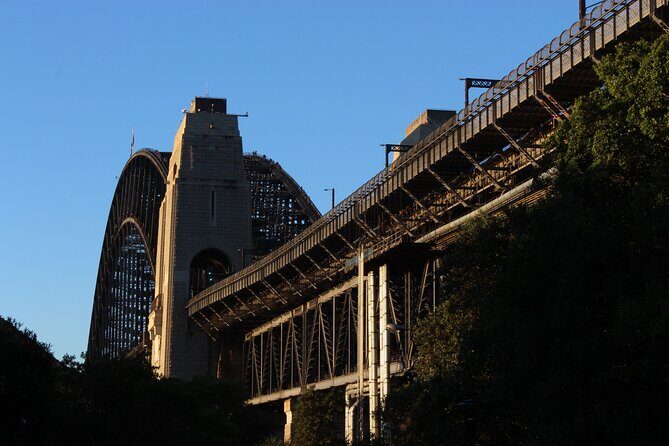
Next up is the Sydney Harbour Bridge, one of the easiest places to learn “structure in a photograph.” Bridges naturally give you leading lines, layers, and a sense of scale. But capturing those strengths requires more than aiming and shooting.
This is where the workshop’s emphasis on technique pays off:
- You’ll practice how changing your angle changes the story of the image
- You’ll work with exposure decisions so dark areas don’t turn into muddy silhouettes
- You’ll apply composition approaches so the bridge sits in the frame the way you intend
Even if you already know the bridge is iconic, you might be surprised by how many different “bridge photos” exist depending on your framing and how you manage highlights. In manual mode, you can chase the look you want rather than accepting whatever the camera decides.
You can also read our reviews of more tours and experiences in Sydney




Stop 3: Circular Quay—spotting light and reflection opportunities
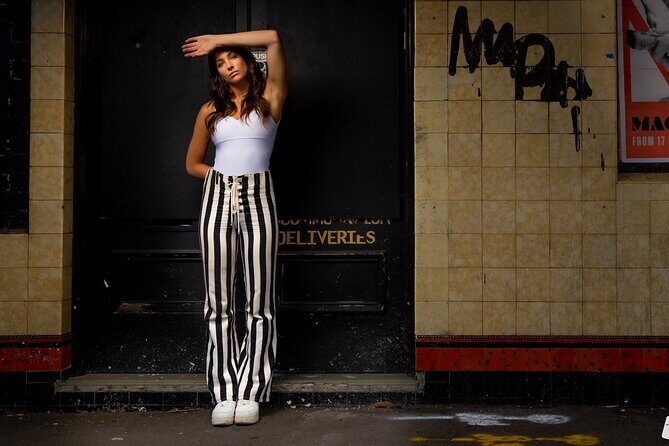
At Circular Quay, you start dealing with lots of surfaces that can reflect light and add visual energy to your frame. The workshop’s focus on working with various lighting conditions becomes very real here.
You’ll likely practice:
- How to judge lighting quickly, rather than waiting to guess later
- How reflections and brightness levels affect exposure choices
- How to keep a subject clear while the background shifts
This stop is valuable because it forces you to think like a photographer, not a tourist. Instead of only asking, Where is the landmark?, you also ask, How does the light behave right now?
One more reason this stop matters: the scene complexity helps you practice prioritising what the photo needs. Not every element should be equally sharp or equally bright. Learning to simplify is part of composition—and simplifying is often the difference between an average photo and a strong one.
Stop 4: The Rocks precinct for texture, atmosphere, and story
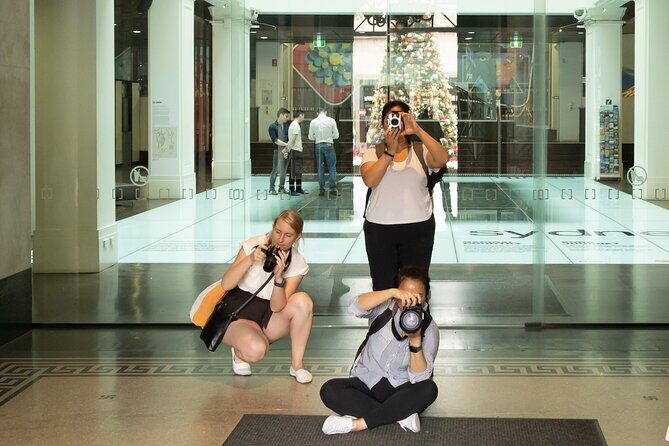
The finale heads to The Rocks, an area that’s perfect for practicing more than skyline shots. The Harbour landmarks are huge and obvious. The Rocks gives you texture, smaller details, and a sense of street-level storytelling.
Because the workshop is designed to include both well-known and some lesser-seen photographic locations around the harbour foreshore, you should expect the session to end with more variety than just another wide vista. This is where your earlier learning comes back:
- Use your composition techniques even when the subject is smaller
- Apply what you learned about manual exposure to darker streets and brighter edges
- Work on the “pre-visualise” skill—choosing what the viewer should notice first
If you want photos that feel lived-in rather than purely architectural, this stop is where you’re most likely to get them. And since the class is still happening while you’re learning, you’ll be able to correct course on the spot rather than learning later at home.
Teaching style that actually helps you shoot better
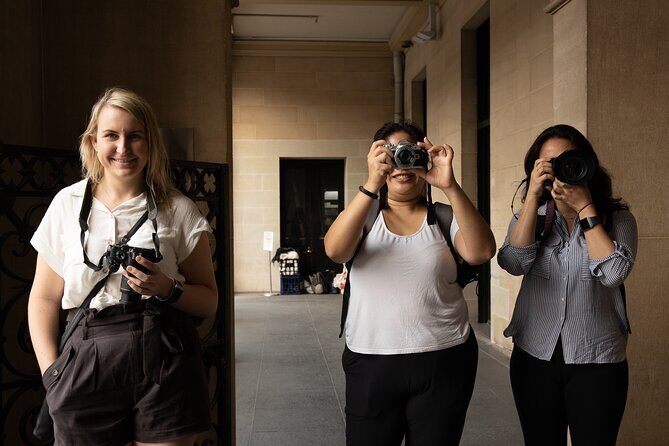
The quality of instruction is a big part of why this workshop fits beginners and returners alike. In past experiences shared about Sydney Photographic Workshops, instructors like Daniel Linnet were highlighted for being an outstanding teacher—clear, easy to follow, and ready to share extensive knowledge. Another name you may see connected with instruction and images is Glenn Lockitch, which points to a workshop rooted in professional photo craft.
What I take from that for your experience: the class isn’t just about showing where to stand. It’s about explaining what you should be thinking while you’re standing there. You learn the basics, then you practice them during an on-street excursion, which is exactly how photography skill improves.
If you’re a returning photographer who’s rusty, this format helps you get unstuck quickly. You’re not starting from scratch with random settings. You’re being guided back to the fundamentals in a way that makes sense for modern digital cameras and real scenes.
Gear checklist: what to bring (and what to skip)
The workshop is explicitly built for cameras that can do full manual control. So you should bring:
- Your camera (SLR or mirrorless works great)
- Any lenses you plan to use on the day
- The core kit you already know how to operate
If your compact camera lacks full manual capability, the workshop likely won’t match what it’s teaching. That’s not a “hard rule” for enjoyment, but it’s a hard rule for whether the manual-mode training is useful to you.
Also, bring the simplest thing you can manage comfortably for a four-hour walk. This is a teaching experience, so the less you fight your gear, the more you learn.
Price and value: is $107.59 worth it?
At $107.59 per person for about 4 hours, you’re paying for two things: professional instruction and hands-on practice in high-value locations. The value isn’t just the landmarks. It’s the fact that you’re learning essentials like shooting modes, manual exposure, composition, and lighting while you’re actually photographing those conditions.
Small group size (max 10) also affects value. When the group is smaller, you get more chances to ask questions and test ideas. That’s how you translate a lesson into better photos faster.
So if your goal is practical improvement—understanding your camera and leaving with a stronger process—this price can make sense. If your goal is a sightseeing walk with no intention to learn settings, you might find it better to spend that money on a self-guided harbour day and only take one quick workshop later.
Who should book this workshop?
This is a strong fit if you:
- Want a beginner-friendly path into digital photography essentials
- Want to understand your camera’s modes and move into manual control
- Like learning by doing, not just watching
- Want a guided photo walk that covers multiple harbour areas, including The Rocks
It may not fit if:
- You only have a compact camera without full manual capability
- You don’t want to do any walking or standing for photo stops (there’s a moderate fitness note)
Should you book Photography Essentials in Sydney Harbour Foreshore?
If you want a structured way to improve quickly, I’d book it. The format is built for real skill growth: camera basics first, then manual-mode practice, then composition and lighting decisions as you move through four different photographic zones. The small group size helps the instruction land, and the mix of famous sights plus the Rocks precinct gives you variety in your final set of images.
If you’re still unsure, use this simple test: do you want to leave knowing what to set on your camera and how to plan your shot? If yes, this workshop is a great use of a half day.
FAQ
How long is the Photography Essentials Workshop?
It runs for approximately 4 hours.
Where does the workshop start?
You start at Customs House, 31 Alfred St, Sydney NSW 2000, Australia.
What time does it start?
The start time is 12:00 pm.
What is the price per person?
The price is $107.59 per person.
What cameras is this workshop suitable for?
It’s suitable for any camera with full manual capability, including SLR and mirrorless cameras. It is not suitable for compact cameras without full manual capability.
What route and stops are included?
You’ll visit the Sydney Opera House, Sydney Harbour Bridge, Circular Quay, and The Rocks.
Is the group large?
No. This workshop has a maximum of 10 travelers.
What if the weather is poor?
The experience requires good weather. If it’s canceled due to poor weather, you’ll be offered a different date or a full refund.
Are service animals allowed?
Yes, service animals are allowed.
You Might Also Enjoy
More Workshops & Classes in Sydney
More Photography Tours in Sydney
More Tour Reviews in Sydney
- Blue Mountains Small-Group Tour from Sydney with Scenic World,Sydney Zoo & Ferry
★ 5.0 · 3,709 reviews